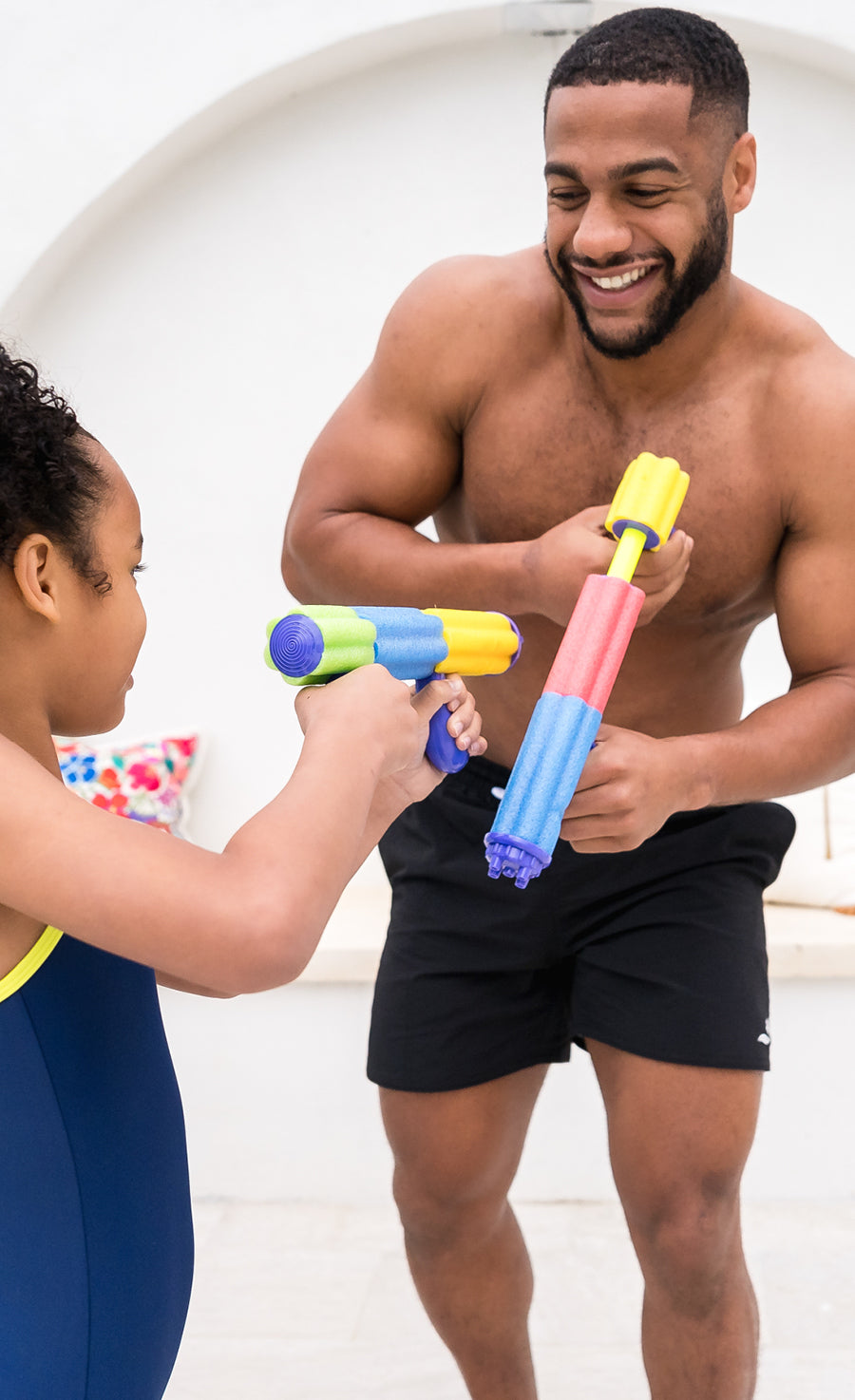
Badezeit ist nicht nur dafür da, die Kleinen sauber zu bekommen; sie ist eine der wertvollsten Lernmöglichkeiten im Alltag Ihres Kindes. Forschungsergebnisse zeigen, dass die Badezeit entscheidend für die kognitive und emotionale Entwicklung ist, da die Gehirne der Kinder bei jedem Planschen, Gießen und Kichern Informationen aufnehmen.
Als Eltern kennen wir bereits die beruhigende Kraft eines warmen Bades. Aufgebracht oder krank? Ein warmes Bad hilft. Müssen Sie von aktivem Spiel zur Schlafenszeit übergehen? Die Badezeit ist Ihre Antwort. Doch über die unmittelbare beruhigende Wirkung hinaus können Badeaktivitäten für Kleinkinder und Vorschulkinder die Sprachentwicklung, motorische Fähigkeiten, Wassersicherheit und sogar erste Mathematik- und Naturwissenschaftskonzepte fördern.
In diesem Leitfaden werden wir zehn lustige und lehrreiche Badeaktivitäten erkunden, die Ihr Badezimmer in ein Mini-Klassenzimmer verwandeln, ohne dass es sich wie Lernen anfühlt. Und noch besser: Viele dieser Aktivitäten bereiten Ihr Kind auf den Schwimmunterricht vor und bauen dieses entscheidende Wasservertrauen bequem von zu Hause aus auf.
Warum ist die Badezeit wichtig für die Entwicklung?
Bevor wir uns den Aktivitäten widmen, wollen wir verstehen, warum die Badezeit für die Entwicklung Ihres Kindes so wichtig ist.
Kognitive und emotionale Vorteile:
Die Badezeit spricht alle fünf Sinne gleichzeitig an: das Gefühl von Wasser auf der Haut, das Geräusch des Planschens, das Sehen von schwebenden Blasen, der Geruch von Seife und sogar der Geschmack (obwohl wir diesen vermeiden wollen!). Dieses multisensorische Erlebnis regt das Gehirn Ihres Kindes an, sich zu konzentrieren und aufmerksam zu sein, was die neuronale Entwicklung in diesen entscheidenden frühen Jahren unterstützt.
Entwicklung der motorischen Fähigkeiten:
Vom Ausdrücken von Schwämmen über das Gießen von Wasser bis zum Spielen mit Spielzeug – Badeaktivitäten fördern sowohl die Feinmotorik (kleine Handbewegungen) als auch die Grobmotorik (größere Körperbewegungen wie Treten und Greifen).
Sprachentwicklung:
Die Badezeit bietet natürliche Gelegenheiten zur Unterhaltung. Handlungen beschreiben ("du gießt das Wasser"), Körperteile benennen und einen reichen Wortschatz einführen ("planschen", "rieseln", "glitschig") – all das unterstützt den Spracherwerb.
Wasservertrauen:
Für Familien, die Schwimmunterricht planen, hilft das regelmäßige Spielen in der Badewanne, sich an Wasser zu gewöhnen, einschließlich des Benässens des Gesichts, des Untertauchens und des Verständnisses, wie sich Wasser bewegt. Diese Grundlage macht den formellen Schwimmunterricht erheblich einfacher und angenehmer.
Emotionale Regulation:
Das warme Wasser und die taktile Stimulation während der Badezeit können dazu beitragen, die Herzfrequenz zu verlangsamen, den Blutdruck zu senken und die Entspannung zu fördern – perfekt zum Entspannen vor dem Schlafengehen.
10 Badeaktivitäten für Kleinkinder und Vorschulkinder

1. Schwimm- und Sinke-Wissenschaft
Was Sie brauchen: Verschiedene Badespielzeuge, Haushaltsgegenstände (Plastikbecher, Schwamm, kleines Spielzeugauto, Gummiente). Unsere Schwimmzubehör-Bundles bieten eine vielfältige Auswahl an Spielzeugen sowie essentielle Schwimmausrüstungsgegenstände, die in der Badewanne und im örtlichen Freizeitzentrum verwendet werden können.
Spielanleitung: Sammeln Sie Gegenstände, die schwimmen und sinken, und lassen Sie Ihr Kleinkind experimentieren. Stellen Sie offene Fragen: "Was, glaubst du, wird mit diesem Spielzeug passieren?" "Warum schwimmt die Ente, aber das Auto sinkt?" Ermutigen Sie sie, sinkende Objekte herauszufischen, was die Hand-Augen-Koordination und das Wasservertrauen fördert.
Was sie lernen: Grundlegende physikalische Konzepte, Ursache und Wirkung, Problemlösung und Wasservertrauen. Dieses praktische wissenschaftliche Experiment führt Konzepte ein, denen sie Jahre später in der Schule begegnen werden.
2. Gießen und Messen

Was Sie brauchen: Stapelbecher, Plastikkannen, Messbecher, Trichter
Spielanleitung: Zeigen Sie Ihrem Kleinkind, wie man Behälter füllt und wieder leert. Verwenden Sie Becher unterschiedlicher Größe, um Konzepte wie "dieser fasst mehr" oder "dieser füllt sich schneller" zu demonstrieren. Lassen Sie es mit dem Gießen aus verschiedenen Höhen oder mit Trichtern experimentieren.
Was sie lernen: Frühe mathematische Konzepte (Volumen, Kapazität, mehr/weniger, voll/leer), Feinmotorik, Hand-Augen-Koordination und Geduld. Dies sind grundlegende Fähigkeiten für das spätere Mathematiklernen.
Top-Tipp: Verwenden Sie offene Fragen wie "Was passiert, wenn wir Wasser von oben herabgießen?" anstatt ihnen immer alles zu zeigen. Dies fördert selbstständiges Denken und Beobachtungsfähigkeiten.
3. Schaumbuchstaben und Zahlen

Was Sie brauchen: Schaumbuchstaben und -zahlen für die Badewanne
Spielanleitung: Diese genialen kleinen Buchstaben kleben an den Badewannenwänden und Fliesen, wenn sie nass sind. Verwenden Sie sie, um den Namen Ihres Kindes zu buchstabieren, das Alphabet zu üben, einfache Wörter zu bilden oder zu zählen. Sie können auch nach Farben sortieren oder Buchstaben-Schatzsuchen veranstalten ("Kannst du den Buchstaben B finden?").
Was sie lernen: Buchstabenerkennung, Phonetik, Rechtschreibung, Zahlenerkennung, Farbsortierung und Feinmotorik beim Abziehen und Aufkleben der Buchstaben.
Schwimmverbindung: Das Erlernen von Buchstaben und Zahlen in der Badewanne hilft Kindern, sich in Wassernumgebungen wohl und fähig zu fühlen, was ein Selbstvertrauensschub ist, der sich auf das Schwimmbad überträgt.
4. Musikalische Badezeit

Was Sie brauchen: Nur Ihre Stimmen, Badespielzeug und Begeisterung!
Spielanleitung: Integrieren Sie Lieder, die Bewegungen und Zählen beinhalten. Hier sind einige Favoriten, die für die Badezeit angepasst wurden:
- "Wenn du glücklich bist und du es weißt" – Klatschen Sie in die Hände und spritzen Sie dann auf die Wasseroberfläche. Dies stärkt das Wasservertrauen, da sie lernen, dass Spritzen Spaß macht und nicht beängstigend ist.
- "Fünf kleine Enten" – Verwenden Sie Gummi-Enten, um das Lied nachzuspielen, was beim Zählen und Erzählverständnis hilft.
- "Zwei kleine Dickie-Vögel" – Verwenden Sie Badespielzeug, um zu demonstrieren, wie die Vögel wegfliegen und zurückkehren, was die Objektpermanenz lehrt.
- "1, 2, 3, 4, 5, einmal fing ich einen Fisch lebendig" – Zählen Sie an Fingern oder mit Badespielzeug und verwenden Sie einen Spielzeugfisch oder ahmen Sie Fangbewegungen nach.
- "Kopf, Schultern, Knie und Zehen" – Perfekt, um Körperteile beim Waschen zu lernen.
Was sie lernen: Rhythmus, Sprachentwicklung, Zählen, Körperwahrnehmung, Befolgen von Anweisungen und die Freude an Musik. Singen unterstützt auch die Gedächtnisentwicklung und den emotionalen Ausdruck.
5. Zielübungen

Was Sie brauchen: Stapelbecher, Gummi-Enten oder Plastikflaschen; Wasserpistole oder Quetschflasche.
Spielanleitung: Stellen Sie Ziele entlang des Badewannenrands auf (Becher, Enten, Flaschen) und verwenden Sie eine Wasserpistole oder eine Quetschflasche, um sie umzustoßen. Beginnen Sie mit größeren Zielen in der Nähe und erhöhen Sie den Schwierigkeitsgrad, wenn sich ihre Fähigkeiten verbessern. Ermutigen Sie zum Zählen, wenn jedes Ziel fällt.
Was sie lernen: Hand-Augen-Koordination, Zielgenauigkeit und räumliches Vorstellungsvermögen, Zählen und Ursache und Wirkung. Diese Aktivität ist fantastisch, um die Feinmotorik zu entwickeln, die für das Schreiben und andere präzise Handbewegungen erforderlich ist.
Seien Sie vorbereitet: Der Badezimmerboden könnte etwas nass werden, aber die Entwicklungsvorteile und das Kichern sind es wert! Halten Sie ein Handtuch an der Badezimmertür bereit.
6. Schatzsuche

Was Sie brauchen: Plastikmünzen, blinkendes Badespielzeug oder kleine wasserdichte Gegenstände; optional: Kinder-Schwimmbrille
Spielanleitung: Werfen Sie "Schätze" auf den Boden der Badewanne und ermutigen Sie Ihr Kind, danach zu suchen. Wenn es sich wohlfühlt, können Sie eine Schwimmbrille einführen, damit es unter Wasser sehen kann. Dies ist eine hervorragende Vorbereitung auf das Schwimmenlernen. Zählen Sie die gefundenen Schätze gemeinsam und beschreiben Sie, was sie sehen.
Was sie lernen: Wassersicherheit, Atemkontrolle, Zählen, Farberkennung und beschreibende Sprache.
Verbindung zum Schwimmen: Diese Aktivität bereitet Kinder direkt auf den Schwimmunterricht vor, indem sie das Eintauchen des Gesichts ins Wasser und das Öffnen der Augen unter Wasser normalisiert. Viele Kinder finden ihre erste Schwimmstunde weniger einschüchternd, wenn sie dies bereits in der Badewanne erlebt haben.
Sicherheitshinweis: Beaufsichtigen Sie Wasseraktivitäten immer genau, stellen Sie sicher, dass sich Ihr Kind wohlfühlt und zwingen Sie es niemals, das Gesicht unter Wasser zu halten.
7. Magisches Farbenmischen

Was Sie brauchen: Badesichere Farbtabletten, farbige Eiswürfel oder Badefarben
Spielanleitung: Geben Sie Farbe ins Wasser und lassen Sie Ihr Kleinkind beobachten, wie es sich verwandelt. Verwenden Sie mehrere Farben in verschiedenen Bereichen und ermutigen Sie es, das Wasser zu verwirbeln, um Farben zu mischen. Sie können auch farbiges Wasser in Eiswürfelformen einfrieren und es in der Badewanne schmelzen lassen, um eine langsamere Farbentwicklung zu erzielen.
Was sie lernen: Farberkennung, Farbenmischen (Rot + Blau = Lila), Ursache und Wirkung und wissenschaftliche Beobachtung. Dieses sensorische Erlebnis ist fesselnd für junge Köpfe.
8. Malen in der Badewanne
Was Sie brauchen: Badekreide oder selbstgemachte Badefarbe (Rasierschaum + ein Tropfen Lebensmittelfarbe)
Spielanleitung: Lassen Sie Ihr Kind auf die Badewannenränder, Fliesen oder sogar auf sich selbst malen. Badekreide ist abwaschbar und so konzipiert, dass sie leicht wieder abgeht. Für Badefarbe mischen Sie Rasierschaum mit Lebensmittelfarbe und lassen Sie es mit den Fingern oder Pinseln malen.
Was sie lernen: Kreativer Ausdruck, Feinmotorik (insbesondere Vorschreibfähigkeiten), Farberkennung und sensorische Erkundung.
Top-Tipp: Testen Sie Badekreide und -farben immer zuerst an einer kleinen Stelle, um sicherzustellen, dass sie sich in Ihrem Badezimmer leicht abwaschen lassen.
9. Eis- und Temperaturexploration

Was Sie brauchen:
Eiswürfel (klar oder farbig)
Spielanleitung: Geben Sie Eiswürfel in warmes Badewasser und lassen Sie Ihr Kleinkind beobachten, wie sie schmelzen. Es kann versuchen, das glatte Eis zu fangen, beobachten, wie es die Wassertemperatur verändert, und zusehen, wie es verschwindet. Stellen Sie Fragen wie: "Warum schmilzt das Eis?" oder "Wie fühlt es sich anders an als das warme Wasser?"
Was sie lernen: Temperaturkonzepte (heiß/kalt/warm), Aggregatzustände (fest zu flüssig), Ursache und Wirkung und wissenschaftliche Beobachtung.
10. Schwimmfähigkeiten üben

Was Sie brauchen: Wasser, Begeisterung und eventuell unsere Schwimmzubehör-Bundles, um alles zu haben, was Sie für den Übergang von der Badewanne zum Schwimmbad brauchen.
Spielanleitung: Nutzen Sie die Badezeit, um Bewegungen und Phrasen aus dem Schwimmunterricht zu üben. Ermutigen Sie zu:
- Strampeln: "Strample, strample, strample deine Beine!"
- Armbewegungen: "Zeig mir deine großen Tigerarme" (die Schwimmbewegung)
- Gesichtsspritzer: Spritzen Sie sanft Wasser auf ihr Gesicht
- Haare nass machen: Gießen Sie Wasser mit einem Becher über ihren Kopf
- Blasen blasen: Üben Sie, Blasen auf die Wasseroberfläche zu blasen
- Rückenlage: Unterstützen Sie sie beim Üben des Rückenschwimmens (in seichtem Wasser)
Was sie lernen: Schwimmtechnik, Wassersicherheit, Befolgen von Anweisungen und Körperbewusstsein. Diese Übung zwischen den Stunden festigt das, was sie im Schwimmunterricht lernen.
Verbindung zum Schwimmen: Regelmäßiges Üben dieser Fähigkeiten zu Hause beschleunigt den Fortschritt im formellen Schwimmunterricht erheblich.
Kinder, die sich mit Wasser im Gesicht wohlfühlen und mit grundlegenden Bewegungen vertraut sind, machen in den Schwimmstufen tendenziell schnellere Fortschritte.
Erinnerung an die Aufsicht durch Erwachsene: Kinder sollten während des Badens immer von einem Erwachsenen beaufsichtigt werden.
Wie lange sollte die Badezeit für Kleinkinder dauern?
Die ideale Badezeit variiert je nach Alter und Temperament:
- Kleinkinder (1-3 Jahre): 10-20 Minuten sind in der Regel ausreichend
- Vorschulkinder (3-5 Jahre): 15-25 Minuten ermöglichen Zeit zum Spielen und Lernen
- Anzeichen, dass es Zeit ist, rauszugehen: Die Haut beginnt stark zu schrumpfen, das Wasser wird kalt oder Ihr Kind wird müde oder wählerisch
Die Badezeit als Teil Ihrer Routine
Konsistenz ist der Schlüssel: Versuchen Sie, Ihr Kind jeden Tag zur gleichen Zeit zu baden. Diese Vorhersehbarkeit hilft Kindern, sich sicher zu fühlen und macht die Schlafenszeit-Routine reibungsloser.
Vor dem Schlafengehen ist ideal: Das warme Wasser und beruhigende Aktivitäten helfen, vom aktiven Spielen in den Schlafmodus überzugehen, was das Schlafengehen erleichtert.
Bleiben Sie präsent: Die Badezeit erfordert Ihre volle Aufmerksamkeit für die Sicherheit, was bedeutet, dass es auch eine Gelegenheit ist, ganz bei Ihrem Kind zu sein, keine Telefone, nur Verbindung und Spiel.
Aktivitäten rotieren: Sie müssen nicht alle 10 Aktivitäten bei jedem Bad erledigen. Wechseln Sie verschiedene Aktivitäten ab, um die Dinge frisch zu halten und das Interesse Ihres Kindes zu wecken.
Wenn die Badezeit schwierig ist
- Erzwingen Sie es nicht: Verwenden Sie stattdessen einen Waschlappen für eine schnelle Reinigung und versuchen Sie es an einem anderen Tag noch einmal.
- Identifizieren Sie die Angst: Ist es das Geräusch des Abflusses? Haare waschen? Wasser in den Augen? Gehen Sie auf spezifische Bedenken ein.
- Machen Sie es schrittweise: Lassen Sie sie mit Badespielzeug außerhalb der Badewanne spielen, in einer leeren Wanne sitzen und dann schrittweise Wasser hinzufügen.
- Gemeinsam baden: Ein gemeinsames Bad kann ängstlichen Kindern helfen, sich sicherer zu fühlen.
- Verwenden Sie einen visuellen Zeitplan: Zeigen Sie ihnen, was nach dem Baden kommt (Geschichte, Kuscheln, Bett), damit sie wissen, was sie erwartet.
Die Badezeit bietet so viel mehr als nur Sauberkeit. Diese zehn Aktivitäten verwandeln Ihr Badezimmer in eine Lernumgebung, in der Kleinkinder und Vorschulkinder durch Spielen wichtige Fähigkeiten entwickeln, einschließlich früher Schwimmfähigkeiten.
Wenn Ihr Kind bereit für den Schwimmunterricht ist, macht die richtige Badebekleidung den entscheidenden Unterschied. Unsere preisgekrönten Happy Nappy™ Produkte bieten Auslaufschutz und Sicherheit, während unsere Schwimmhilfen wie die Go Splash Float Jacket die Schwimmentwicklung Ihres Kindes mit einstellbarem Auftrieb unterstützen. Wenn Sie das Selbstvertrauen im Wasser beim Baden aufbauen und es dann mit hochwertigen Schwimmprodukten unterstützen, schaffen Sie die Voraussetzungen für ein Leben lang sicheren Wasserspaß für Ihr Kind.
Am wichtigsten ist, dass die Badezeit eine Verbindung schafft. In unserem geschäftigen Leben sind diese 15-20 Minuten ablenkungsfreier, spielerischer Interaktion kostbar. Ihr Kleinkind wird sich nicht an jedes Bad erinnern, aber es wird sich an das Gefühl erinnern, ganz bei Ihnen zu sein, zu lernen, zu lachen und gemeinsam zu wachsen.
Haken Sie also heute Abend das „Bad“ nicht einfach von Ihrer To-Do-Liste ab. Schnappen Sie sich ein paar Becher und unsere Schwimmzubehör-Pakete, singen Sie ein albernes Lied und beobachten Sie, wie sich Ihr Badezimmer in einen Raum des Lernens, Wachstums und der Freude verwandelt.

Lesley Beach
Splash About has been developing ground breaking swimming products for babies and children for over 20 years. With its invention of the first float jacket through to the award winning Happy Nappy range of products, Splash About is now a world class supplier to thousands of swim schools, leisure complexes and parents in over 45 countries.