

Kurze Antwort: Wie beeinflusst Badebekleidung das Selbstvertrauen von Jungen im Wasser?
Die richtige Badebekleidung beeinflusst das Selbstvertrauen eines Jungen im Wasser direkt, indem sie drei Schlüsselfaktoren berücksichtigt: Komfort (richtige Passform verhindert Ablenkungen), Wärme (Wärmeschutz verlängert die Übungszeit) und Selbstbild (altersgerechte Designs reduzieren Unsicherheiten). Untersuchungen zeigen, dass Kinder, die sich im Wasser körperlich wohlfühlen, schneller lernen und bessere Schwimmfähigkeiten entwickeln. Das Kombinieren von gut sitzenden Badehosen mit einem Rash Vest schafft die ideale Grundlage für selbstbewusstes Schwimmen.
In diesem Leitfaden
- Warum Wassersicherheit wichtig ist
- Die Psychologie von Badebekleidung und Selbstvertrauen
- Was die Forschung sagt
- Badebekleidung nach Vertrauensstufe
- Vergleichstabelle: Badebekleidung für jedes Szenario
- Die richtige Passform wählen
- Essentials für den Sonnenschutz
- Ein komplettes Schwimm-Kit zusammenstellen
- Pflegehinweise
- FAQs


Beim Wasserselbstvertrauen geht es um mehr als nur darum, den Pool zu genießen. Laut Swim England ist Schwimmen die einzige Sportart im nationalen Lehrplan, weil es die einzige körperliche Aktivität ist, die Leben retten kann. Ihre Forschung zeigt eine besorgniserregende Statistik: Etwa 200.000 Kinder (fast jedes dritte) können beim Verlassen der Grundschule die gesetzlich vorgeschriebenen 25 Meter nicht schwimmen.

Gerade für Jungen spielt Wasserselbstvertrauen eine entscheidende Rolle für langfristige Sicherheit und Freude. Das Swim England Learn to Swim Programm identifiziert vier Schlüsselkompetenzen für die Wassersicherheit, die jedes Kind erreichen sollte:
- Sicher über mindestens 25 Meter schwimmen können
- Eine Reihe von Schwimmstilen effektiv nutzen
- Sich in verschiedenen wasserbasierten Situationen selbst retten können
- Grundlegende Prinzipien der Wassersicherheit verstehen
Die Psychologie von Badebekleidung und Selbstvertrauen
Drei Schlüsselfaktoren prägen das Selbstvertrauen eines Kindes im Wasser: die Zeit, die es in aquatischer Umgebung verbringt, sein Verständnis der natürlichen Wasserkräfte und seine Fähigkeit, Bewegungen zu kontrollieren. Diese Faktoren beeinflussen direkt, wie körperlich wohl sich ein Kind fühlt. Körperliches Wohlbefinden spielt eine große Rolle für das Selbstvertrauen.
Körperliches Wohlbefinden reduziert mentale Barrieren
Wenn Badebekleidung schlecht sitzt, hochrutscht oder einengt, werden Kinder abgelenkt. Diese Ablenkung lenkt die Aufmerksamkeit vom Lernen ab und kann schnell negative Assoziationen mit dem Schwimmen hervorrufen. Gut designte Jungen-Badebekleidung hilft, dies zu verhindern, mit sicheren Bündchen, flexiblen Stoffen und bequemen Schnitten, die Kindern freie Bewegung ermöglichen.
Wärme verlängert die Lernzeit
Frierende Kinder werden oft ängstliche Kinder. Studien zeigen, dass Kinder Körperwärme schneller verlieren als Erwachsene, da sie ein höheres Verhältnis von Oberfläche zu Körpermasse aufweisen. Wenn ein Junge friert, spannen sich die Muskeln an, die Koordination lässt nach und die Bereitschaft zur Teilnahme schwindet oft. Thermische Optionen wie Shorty-Neoprenanzüge helfen Jungen, länger warm zu bleiben, was es einfacher macht, im Wasser zu bleiben und zu üben, ohne dass Zittern die Sessions verkürzt.
Selbstbild und soziale Selbstsicherheit
Wenn Jungen älter werden, achten sie mehr auf ihr Aussehen, besonders im Umgang mit Gleichaltrigen. Badebekleidung, die sich zu kindlich oder auffällig anders anfühlt, kann sie unsicher machen. Unser Sortiment an Jungen-Badebekleidung umfasst kräftigere, altersgerechte Prints, die speziell für ältere Kinder entworfen wurden und ihnen helfen, sich am Pool selbstbewusst und wohlzufühlen.
Was die Forschung sagt
Das Verständnis der Wissenschaft hinter dem Wasserselbstvertrauen hilft Eltern, fundierte Entscheidungen zu treffen.
Schlüsselstatistiken zum Schwimmen von Kindern
| Erkenntnis | Quelle |
|---|---|
| 25,8 % der Kinder im Alter von 5-16 Jahren schwammen in der letzten Woche (1,92 Millionen junge Menschen) | Swim England Research |
| 71 % der Kinder in Jahr 7 können 25 m schwimmen (erstes Jahr der Sekundarstufe) | Swim England Daten |
| Kinder verlieren im Wasser etwa 25 % schneller Körperwärme als Erwachsene | Stanford Medicine Children's Health |
| Die meisten Kinder zeigen innerhalb von 4-8 Wochen konstanter, sanfter Exposition eine signifikante Verbesserung des Wasserselbstvertrauens | Aquatic Therapy Research |
| UPF50+ Gewebe blockiert über 98 % der schädlichen UV-Strahlen | American Academy of Dermatology |
Expertenmeinung: Die Rolle der Ausrüstung
Laut einer Studie der Swimming Teachers' Association (STA) helfen geeignete Badebekleidung und Ausrüstung Kindern, sich an die aquatische Umgebung anzupassen, indem sie ein Gefühl der Sicherheit vermitteln. Die Verwendung von passender, bequemer Badebekleidung erweist sich als wirksam, um Kindern zu helfen, die durch die Angst vor Wasser verursachten Einschränkungen zu überwinden.
Badebekleidung nach Vertrauensstufe
Unterschiedliche Entwicklungsstufen im Schwimmen erfordern unterschiedliche Ansätze bei der Badebekleidung. So passen Sie die Badebekleidung an das Selbstvertrauen Ihres Sohnes an:

Stufe 1: Aufbau von anfänglichem Wohlbefinden (1-3 Jahre)
In dieser Phase stehen Wärme und Sicherheit an erster Stelle. Kleine Jungen profitieren von:
- UV Sun & Sea Wetsuits für thermischen Schutz und Sonnenschutz
- Vollständige Abdeckung reduziert sensorische Überforderung durch Wasserkontakt
- Helle, ansprechende Drucke schaffen positive Assoziationen
Für Jungen, die noch Windeln tragen, kombinieren Sie Badebekleidung mit geeigneten Schwimmwindelprodukten, um die Poolanforderungen zu erfüllen.

Phase 2: Fertigkeiten entwickeln (3-6 Jahre)
Wenn Jungen mit dem Schwimmunterricht beginnen und grundlegende Wasserfertigkeiten entwickeln, konzentrieren Sie sich auf die Bewegungsfreiheit:
- Shorty-Neoprenanzüge bieten Wärme bei uneingeschränkter Arm- und Beinbewegung
- Eine Go Splash Schwimmweste bietet sanfte Unterstützung und fördert eine korrekte Schwimmposition
- Badehosen mit sicherem Bund verhindern störendes Nachjustieren
Schwimmhilfen dürfen immer nur unter ständiger Aufsicht von Erwachsenen verwendet werden und sind keine Rettungsmittel.
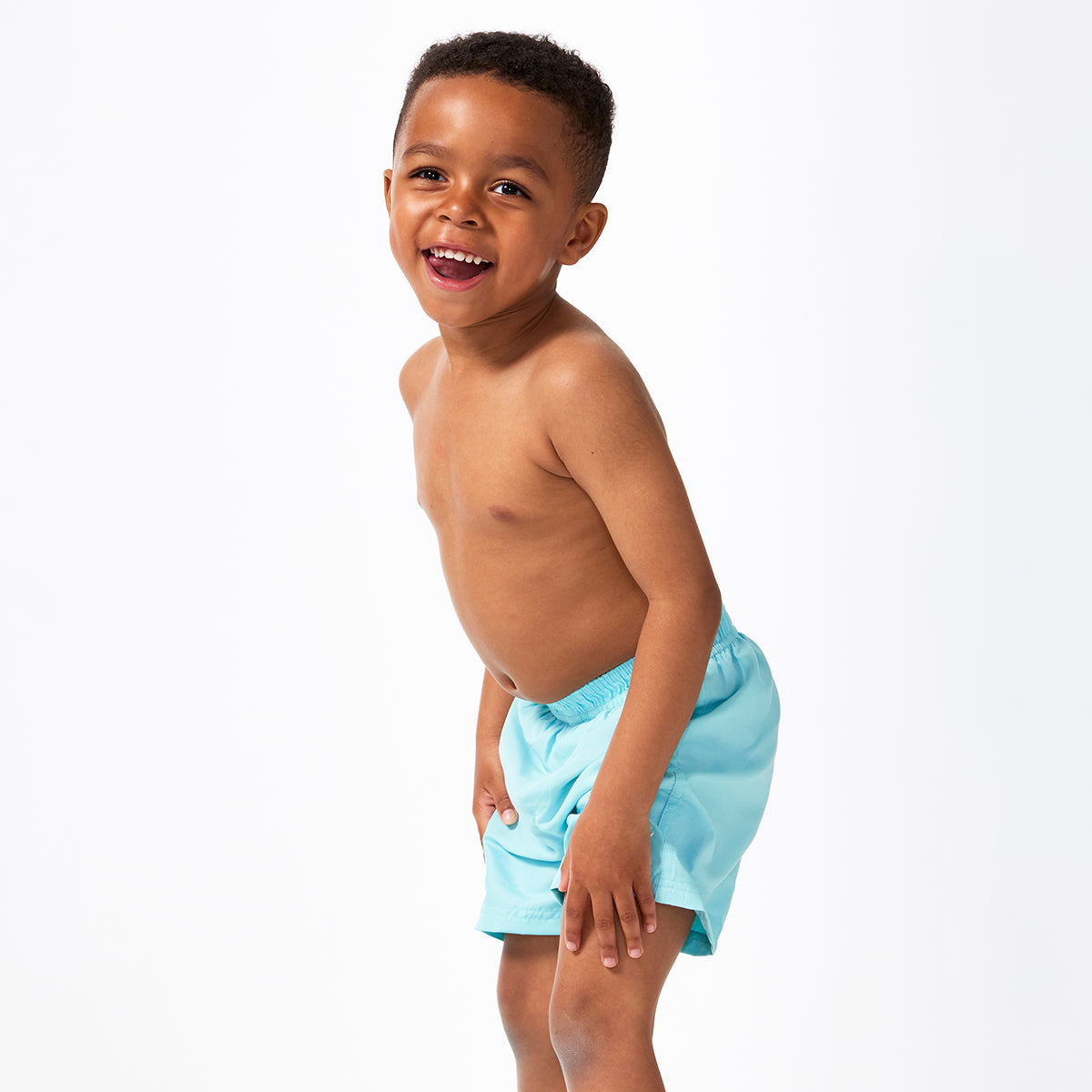
Phase 3: Wachsende Unabhängigkeit (6-10 Jahre)
Sichere Schwimmer, die an der Schlagtechnik und Ausdauer arbeiten, benötigen:
- Badehosen aus schnelltrocknendem, leichtem Stoff, der den Wasserwiderstand reduziert
- Rash Vests für UV-Schutz beim Schwimmen im Freien
- Altersgerechte Designs, die ältere Kinder ansprechen
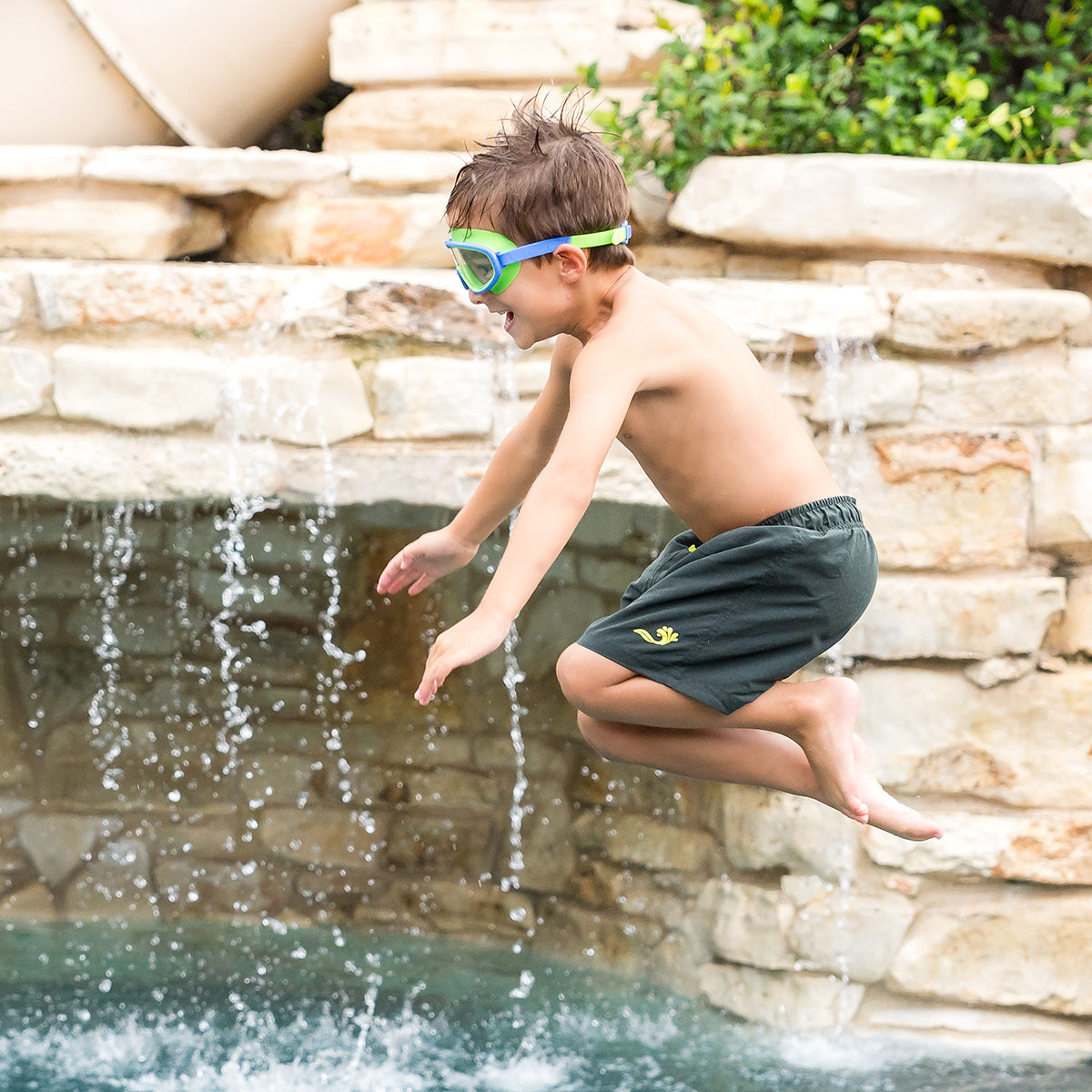
Phase 4: Fortgeschrittenes Schwimmen (ab 10 Jahren)
Ältere Jungen, die sich auf Leistung und Stil konzentrieren, profitieren von:
- Stromlinienförmigen Badehosen, die für Wettkampf- oder regelmäßiges Bahnenziehen entwickelt wurden
- Optionalen Rash Vests für Outdoor-Sessions
- Strapazierfähigen Stoffen, die häufigem Gebrauch standhalten
Vergleichstabelle: Bademode für jedes Szenario
| Szenario | Beste Bademodenwahl | Hauptvorteile | Shop |
|---|---|---|---|
| Schwimmunterricht im Innenbereich | Badeshorts + Rash Vest | Bewegungsfreiheit, dezente Abdeckung | Badeshorts |
| Kühlere Pooltemperaturen | Shorty-Neoprenanzug | Wärmeisolierung, erhöhter Komfort | Shorty-Neoprenanzüge |
| Strandurlaub | UV Sun & Sea Anzug + Legionärshut | UPF50+ Schutz, Wärme für britische Gewässer | UV-Neoprenanzüge |
| Außenpool/Freibad | Badeshorts + Rash Vest + Hut | Sonnenschutz mit Flexibilität | Rash Vests |
| Wasserparks/Planschbecken | Schnelltrocknende Badeshorts | Leicht, schnelltrocknender Komfort | Badeshorts |
| Schwimmen lernen | Neoprenanzug + Schwimmweste | Wärme und unterstützende Positionierung | Go Splash Schwimmweste |
Die richtige Passform wählen
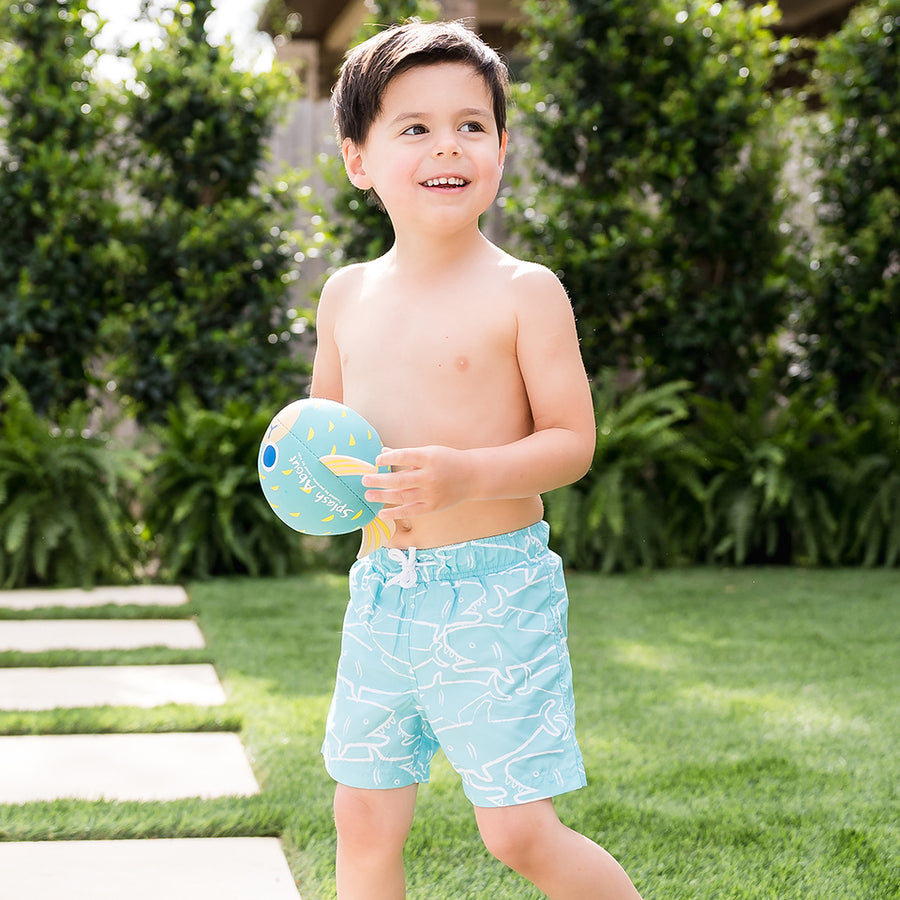
Die richtige Passform macht den Unterschied bei Komfort und Selbstvertrauen. Bademode sollte eng anliegen, ohne die Bewegung einzuschränken.
Passform-Richtlinien:
- Badeshorts sollten bequem an der Taille sitzen, ohne zu verrutschen; achten Sie darauf, dass der Bund beim Bewegen Ihres Sohnes nicht einschneidet oder klafft
- Rash Vests sollten volle Armbewegung ermöglichen, ohne an der Taille hochzurutschen
- Neoprenanzüge sollten eng anliegen, ohne große Lücken oder Falten; ein leichter Widerstand beim Anziehen ist normal und deutet auf eine gute Abdichtung hin
Unsere Jungen-Bademode ist nach Alter größenmäßig sortiert, was die Suche nach der richtigen Passform vereinfacht. Für Jungen zwischen zwei Größen wählen Sie die größere Option für zusätzlichen Platz, insbesondere bei Neoprenanzügen, wo eine etwas lockerere Passform immer noch thermische Vorteile bietet.
Essentials für den Sonnenschutz
Der NHS empfiehlt, dass die Haut von Kindern einen zusätzlichen Schutz vor UV-Strahlen benötigt. Untersuchungen zeigen, dass ein erheblicher Teil der lebenslangen Sonneneinstrahlung vor dem 18. Lebensjahr erfolgt, was den Sonnenschutz in der Kindheit besonders wichtig macht.
UPF-Bewertungen verstehen
| UPF-Bewertung | UV-Blockierung | Schutzstufe |
|---|---|---|
| UPF 15-24 | 93.3-95.9% | Gut |
| UPF 25-39 | 96.0-97.4% | Sehr gut |
| UPF 40-50+ | 97.5-98%+ | Ausgezeichnet |
Alle Jungen-Bademode von Splash About bietet UPF50+-Schutz, der über 98 % der schädlichen UV-Strahlen auf den bedeckten Bereichen blockiert. Dieser Schutz behält seine Wirksamkeit bei richtiger Pflege über die gesamte Lebensdauer des Kleidungsstücks.
Komplette Sonnenschutzstrategie
Für das Schwimmen im Freien kombinieren Sie:
- UPF50+ Rash Vests, die den Oberkörper bedecken
- Nackenschutzmützen, die den Nacken und die Ohren schützen
- Sonnencreme (mindestens LSF30) auf allen unbedeckten Hautstellen
- Erneutes Auftragen von Sonnencreme alle zwei Stunden und nach dem Schwimmen
Denken Sie daran: UPF-Kleidung schützt nur die bedeckten Bereiche. Tragen Sie immer Sonnencreme auf exponierte Hautstellen auf, einschließlich Gesicht, Hände, Ohren und alle unbedeckten Bereiche.
Eine komplette Schwimmausrüstung zusammenstellen
Eine gut vorbereitete Schwimmausrüstung beseitigt Hindernisse für die Teilnahme und hilft, positive Schwimmgewohnheiten zu etablieren.
Checkliste für die Schwimmausrüstung:
Wesentliche Gegenstände:
- Badehose oder Neoprenanzug (je nach Wassertemperatur)
- Rash Vest (für UV-Schutz oder zusätzliche Wärme)
- Handtuch (schnelltrocknende Optionen reduzieren das Taschegewicht)
- Schwimmbrille (richtig angepasst, um Undichtigkeiten zu vermeiden)
- Schwimmtasche (ideal mit Nass-/Trockenfächern)
Für Freiwasserschwimmen:
- Nackenschutzmütze
- Sonnencreme (LSF30+)
- After-Sun-Feuchtigkeitspflege
Für kühlere Bedingungen:
- Shorty-Neoprenanzug oder UV-Sonnenschutz- & Meeresanzug
- Warme Schichten für nach dem Schwimmen
Optionale Extras:
Badekappe (für längere Haare oder Poolanforderungen)
Flip-Flops oder Badeschuhe
Snacks und Wasser für nach dem Schwimmen
Unsere Jungen-Badebekleidung-Bundles kombinieren diese Essentials mit 10 % Ersparnis und machen die Zusammenstellung einer kompletten Ausrüstung zum Kinderspiel.


Pflegeanleitung
Richtige Pflege verlängert die Lebensdauer der Badebekleidung und erhält ihre schützenden Eigenschaften.
Nach jedem Schwimmen:
- Gründlich in kühlem, frischem Wasser ausspülen, um Chlor, Salz und Sand zu entfernen
- Überschüssiges Wasser vorsichtig ausdrücken (nicht wringen oder verdrehen)
- Flach auslegen oder zum Trocknen an einem Ort ohne direkte Sonneneinstrahlung aufhängen
- Vermeiden Sie das Trocknen im Trockner, da dies UPF-Eigenschaften und Elastizität beschädigen kann
Regelmäßige Pflege:
- Handwäsche oder Schonwaschgang in der Maschine mit Feinwaschmittel
- Vermeiden Sie Weichspüler, da diese die wasserabweisenden Eigenschaften beeinträchtigen können
- An einem kühlen, trockenen Ort ohne direkte Sonneneinstrahlung aufbewahren
- Nach längerem Gebrauch Nähte und Gummibänder auf Abnutzung überprüfen
Häufig gestellte Fragen
Welche Badebekleidung empfehlen britische Schwimmschulen für Jungen?
Wie kann ich meinem Sohn helfen, sich im Schwimmunterricht sicherer zu fühlen?
Ist ein Neoprenanzug besser als eine Badehose für Jungen, die schwimmen lernen?
Ab welchem Alter sollten Jungen Rash Vests zum Schwimmen tragen?
Wie oft sollte ich die Badebekleidung meines Sohnes ersetzen?
Brauchen Jungen unterschiedliche Badebekleidung für das Schwimmen im Innen- und Außenbereich?
Haftungsausschluss
In diesem Leitfaden erwähnte Schwimmhilfen sind keine lebensrettenden Geräte und müssen stets unter ständiger Aufsicht eines Erwachsenen verwendet werden. Alle Kinder sollten immer im Wasser beaufsichtigt werden, unabhängig von ihren Schwimmfähigkeiten oder der verwendeten Ausrüstung. Dieser Leitfaden enthält allgemeine Informationen und stellt keine medizinische Beratung dar. Konsultieren Sie bei spezifischen Bedenken bezüglich der Schwimmentwicklung Ihres Kindes entsprechende Fachkräfte.
Suchen Sie Badebekleidung für die ganze Familie? Entdecken Sie unsere Kinder-Schwimmkollektion oder finden Sie passende Optionen in unserem Mädchen-Badebekleidungssortiment.

Lesley Beach
Splash About has been developing ground breaking swimming products for babies and children for over 20 years. With its invention of the first float jacket through to the award winning Happy Nappy range of products, Splash About is now a world class supplier to thousands of swim schools, leisure complexes and parents in over 45 countries.


