
As the warmer months approach, thoughts turn to paddling pools, beach trips, and garden play. While sunshine brings enormous benefits for children's health and happiness, keeping little ones safe from harmful UV rays requires careful planning. This guide covers everything you need to know about sun protection for babies and children.
Why sun protection so important for babies and children
Children's skin is fundamentally different from that of adults, making them far more vulnerable to sun damage. Baby and toddler skin contains significantly less melanin, the protective pigment that helps shield against UV radiation. This means young skin burns much more easily and quickly than adult skin.
The stakes are high. Research shows that just one blistering sunburn in childhood or adolescence nearly doubles a person's chance of developing melanoma later in life. Because children's skin is still developing, damage from UV exposure accumulates over time, with consequences that may not appear until adulthood.
Beyond long-term cancer risks, immediate dangers include painful sunburn, heat exhaustion, and dehydration. Babies and young children can become unwell very quickly in hot weather, developing symptoms like fever, excessive crying, lethargy, and skin redness.

Should babies under 6 months be in direct sunlight?
No, babies under 6 months should be kept out of direct sunlight entirely. The NHS is clear on this guidance: babies younger than six months should be kept out of strong, direct sunlight at all times.
Infant skin is incredibly delicate and sensitive, with minimal natural protection against UV rays.
For these tiny babies, shade is your first and most important line of defence. Use pushchair parasols or sunshades, position yourself under trees or beach umbrellas, and time outdoor activities for early morning or late afternoon when the sun is less intense.
If you absolutely cannot avoid some sun exposure, the NHS advises that you can apply a minimal amount of baby-safe sun cream to small areas like the face and backs of hands, but shade and protective clothing should always be your primary strategies.
What should babies and toddlers wear for sun protection?
Protective clothing forms your first line of defence against harmful UV rays, as recommended by the British Skin Foundation. The key is covering as much skin as possible whilst keeping your child cool and comfortable.
For babies and young children, choose:
- Lightweight, loose-fitting clothes in light colours that reflect rather than absorb heat
- Long-sleeved tops and full-length bottoms when possible
- Fabrics with a tight weave or UPF (Ultraviolet Protection Factor) rating
- A proper sun hat with a wide brim that covers the neck, ears, and shoulders
Legionnaire Hats are the gold standard for children's sun protection. Unlike baseball caps, which leave the ears and neck exposed, legionnaire hats feature an extended fabric flap at the back that shields these vulnerable, easy-to-burn areas. The peak at the front protects eyes from glare whilst the elasticated design prevents the hat from slipping during active play.
Splash About's Legionnaire Hats tick all these boxes with UPF 50+ fabric, quick-drying material suitable for in-and-out-of-water wear, and fun designs that actually encourage children to keep them on. They coordinate with our UPF50+ range, making it easy to create a fully matched, sun-safe outfit.
What is the best swimwear for sun protection?
For water play and swimming, UV protective swimwear offers far superior protection to regular swimming costumes or trunks. Look for garments labelled UPF 50+, which blocks approximately 98% of UV radiation.
Rash tops provide excellent upper body protection with high necks and full shoulder coverage, protecting the areas most prone to burning. These lightweight, moisture-wicking tops are designed to be worn in and out of the water without the constant fuss of changing. They dry quickly, keeping children comfortable whether they're splashing in the pool or playing on the beach.

For babies and toddlers, all-in-one sun protection suits offer the most comprehensive coverage. The Happy Nappy™ Sunsuit combines Splash About's award-winning Happy Nappy™ swim nappy technology with UPF 50+ sun protection fabric. The integrated design means one less thing to worry about, whilst the high neck and three-quarter length sleeves provide superior coverage compared to standard swimwear. The zip fastening at the back makes changing straightforward, even with a wriggly baby.
These sunsuits are particularly valuable for extended beach days or outdoor swimming, where repeated sun cream application might become challenging. They can be worn at indoor pools, outdoor pools, beaches, and even for garden paddling pool play.
Remember, even with protective swimwear, sun cream must still be applied to all exposed areas of skin.
Which sun cream should I use for my baby or child?
For babies over 6 months and all children, choose a broad-spectrum sun cream that protects against both UVA and UVB rays with a minimum SPF of 50.
Many brands produce formulations specifically designed for babies and young children, which are typically gentler and less likely to cause skin irritation. Mineral-based sun creams containing zinc oxide or titanium dioxide are often better tolerated by sensitive skin than chemical filters.
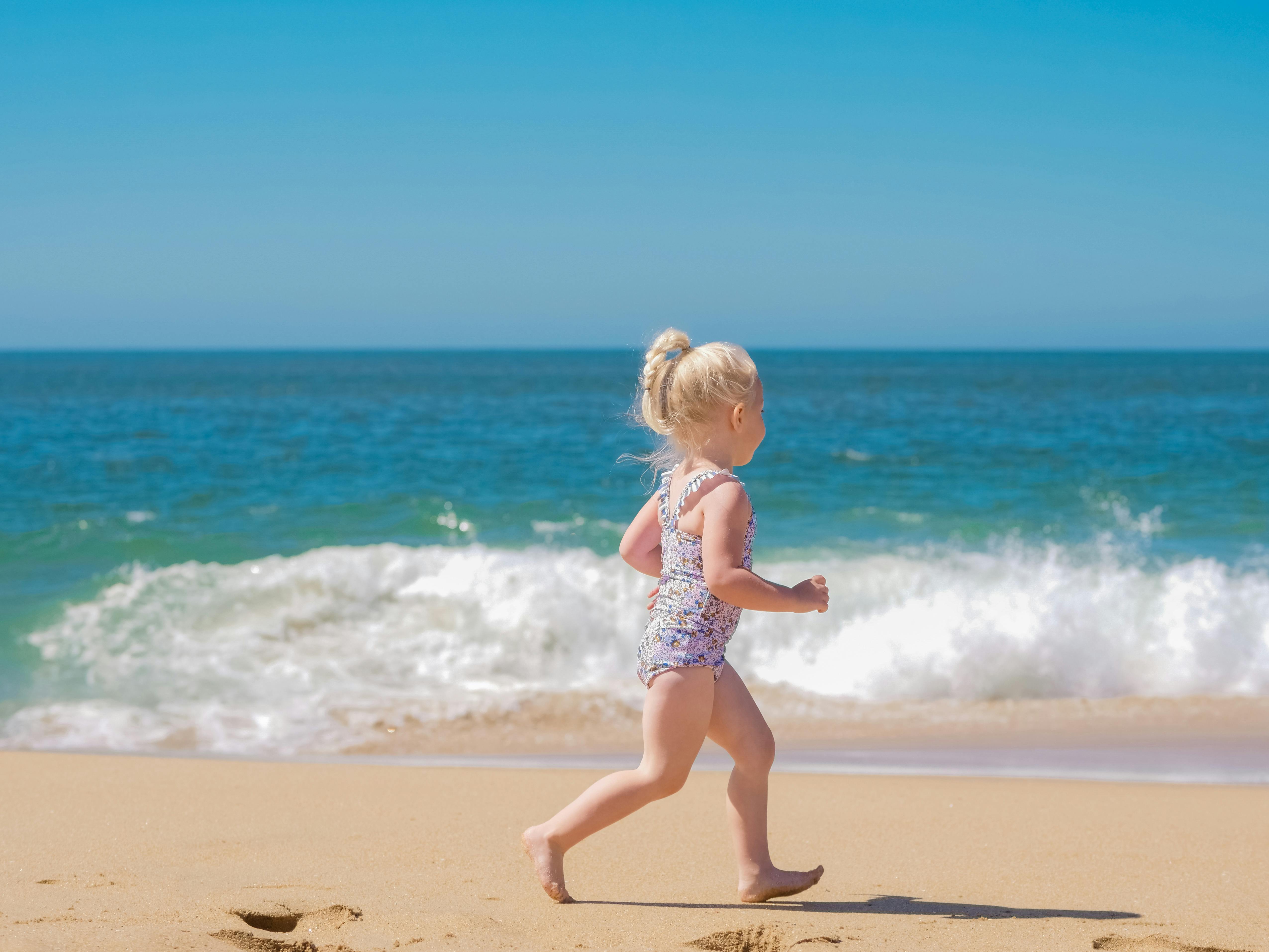
Application technique matters enormously. Use a generous amount - most people apply far too little for it to work effectively. Apply it at least 15 to 30 minutes before going outside so it has time to absorb and bond with the skin properly.
Reapplication is critical and frequently forgotten. You must reapply sun cream every two hours at a minimum, and immediately after swimming or sweating, even if the product claims to be water-resistant. No sun cream is truly waterproof, and water, sweat, and towel drying all remove protective coverage.
Don't forget easily-missed spots like the tops of feet, backs of knees, ears, and the back of the neck. These areas burn surprisingly quickly and are often overlooked.
How can I tell if my child is getting too hot?
Babies and young children cannot regulate their body temperature as effectively as adults, and they can't always communicate when they're uncomfortable. You need to watch for warning signs of overheating:
- Excessive fussiness or crying
- Unusually quiet or lethargic behaviour
- Hot, red, or flushed skin
- Rapid breathing
- Refusing food or drink
- In severe cases, symptoms of heat exhaustion include headache, dizziness, and nausea
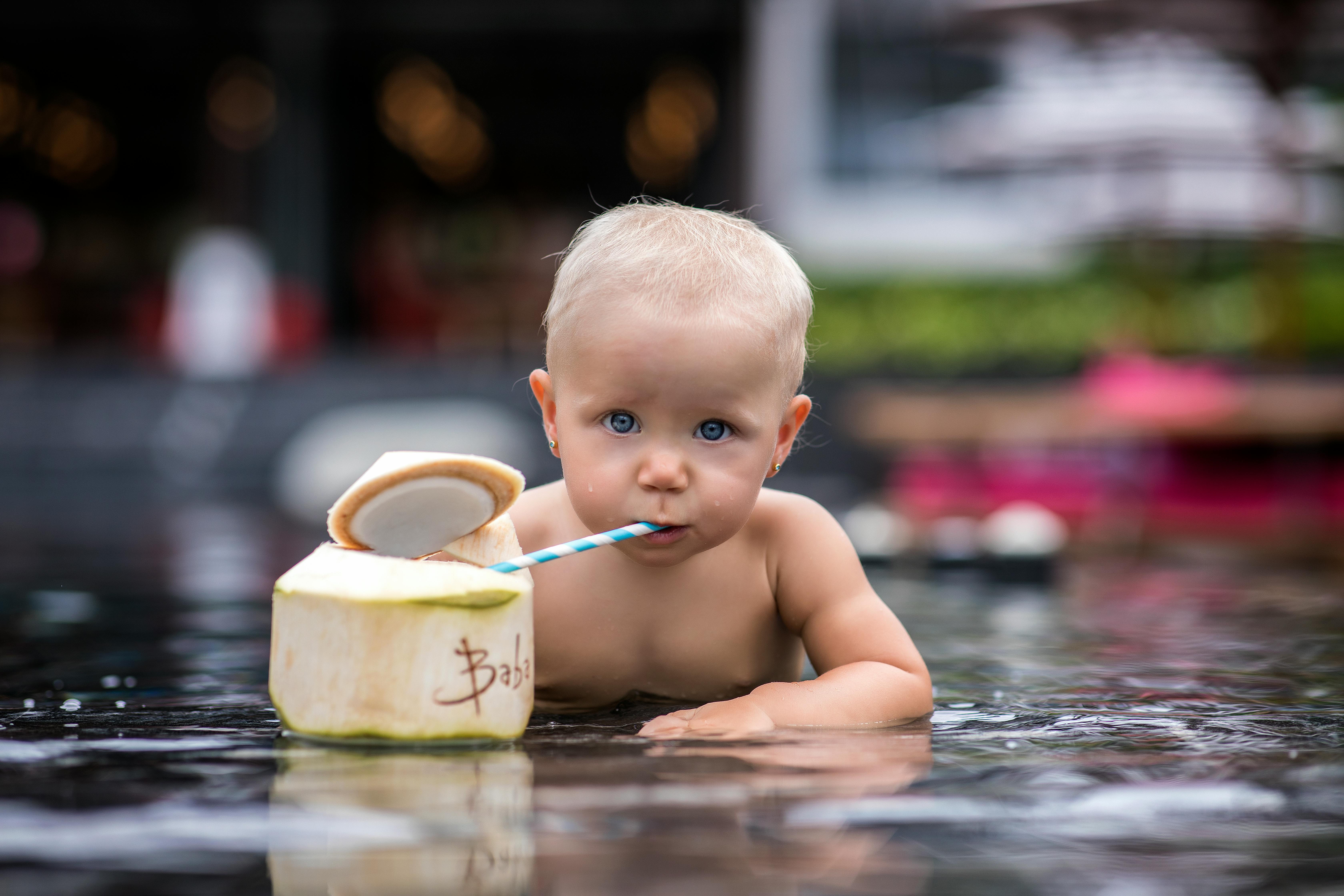
If you notice any of these signs, move your child into the shade or indoors immediately. Remove excess clothing, offer plenty of fluids, and consider a cool (not cold) bath or applying cool, damp cloths to their skin.
The NHS advises that breastfed babies don't need additional water until they start eating solid foods, but they may want to feed more frequently during hot weather. Bottle-fed babies over 6 months can be offered cooled boiled water in addition to their regular feeds.
Regular checks throughout the day are essential. Touch your child's skin frequently to assess their temperature, and don't be fooled by fans or air conditioning in cars - the enclosed space can still become dangerously hot very quickly.
Sun protection while swimming
Water activities require extra vigilance with sun protection for several reasons. Water reflects UV rays, intensifying exposure. Children tend to spend extended periods in and around water when they're having fun. And wet skin is more susceptible to burning than dry skin.
Layer your protection strategies:

First, choose UPF 50+ swimwear that provides built-in protection. Rash tops, sunsuits, and swim shorts made from sun-protective fabric significantly reduce exposed skin area. These garments work even when wet, unlike some sun creams, which wash off in water.
Second, apply generous amounts of sun cream to all exposed areas before swimming. Use a water-resistant formula, but remember this doesn't mean waterproof. You'll still need to reapply immediately after swimming or every two hours, whichever comes first.
Third, incorporate regular shade breaks. Even with protective clothing and sun cream, children shouldn't spend hours in continuous sun exposure. Build in time under beach umbrellas or sun tents, particularly during peak UV hours.
Fourth, don't forget the hat. Legionnaire-style hats designed for water use provide crucial protection for the head, neck, and ears. These lightweight, quick-drying hats can be worn in and out of the water without discomfort.
Can UV clothing replace sun cream?
UV-protective clothing is incredibly effective, but it works best as part of a comprehensive sun protection strategy rather than as a complete replacement for sun cream.
UPF 50+ fabric blocks approximately 98% of UV radiation, providing excellent protection for the areas it covers. This is actually more reliable than suncream, which can be applied incorrectly, missed in spots, or worn off through swimming and sweating.
However, UV clothing typically cannot cover every inch of skin. Faces, hands, feet, and any gaps between garments remain exposed and vulnerable. These areas absolutely need sun cream protection.
The British Skin Foundation advises that clothing should be your first line of defence, with sun cream supplementing coverage on exposed areas. This approach makes particular sense for babies and young children whose sensitive skin may react to sun cream, and who might resist frequent reapplication.
For water activities, UV swimwear dramatically reduces the amount of sun cream needed, which means less frequent reapplication, fewer chemicals on sensitive skin, and less sun cream washing into pools and natural waterways. It's a win for child safety, parent convenience, and environmental responsibility.
What should I do if my child gets sunburnt?
Despite our best efforts, sunburn sometimes happens. If your child's skin becomes red, painful, or shows signs of burning, take immediate action.
Remove them from the sun immediately and move them indoors or into deep shade. Offer plenty of fluids to prevent dehydration, which often accompanies sunburn.
Apply cool (not ice-cold) compresses or give them a cool bath to help soothe the skin. You can use aftersun lotion or moisturiser to keep the skin hydrated, but avoid products with petroleum or oil bases which can trap heat.
For pain relief, you can give age-appropriate doses of infant paracetamol or ibuprofen following the instructions on the packet.
Contact your GP or call 111 if:
Your child has severe blistering or is in significant pain
- They develop a fever, chills, or show signs of heat exhaustion
- The sunburn covers a large area of their body
- You're worried about their symptoms
- Severe sunburn in babies and young children requires medical attention. Don't hesitate to seek help if you're concerned.

For over 20 years, Splash About has specialised in designing innovative swimwear and sun protection for babies and children. Our sun protection range combines practical functionality with thoughtful design.
All our sun protection products coordinate beautifully across designs, so you can create matching outfits that make sun safety fun rather than a battle. Because when children are excited about their swimwear and sun hats, they're far more likely to wear them consistently.
Protecting your children from sun damage doesn't mean avoiding outdoor activities. With proper preparation and consistent habits, you can enjoy beaches, pools, gardens, and parks whilst keeping young skin safe.
Remember that children learn by example. When they see you wearing sun cream, choosing shade, and putting on hats and sunglasses, they're far more likely to accept these habits as normal and necessary.
Start building good sun safety habits early, and you'll be giving your children protection that lasts a lifetime. The time spent establishing these routines now helps prevent serious health problems decades into the future.