Toy Story: What Sensory Swimming Toys Really Teach Us
By Jo Wilson, founder of Aqua Sensory®, in partnership with Splash About
Have you ever wondered why some children light up the moment they hit the water, and others need every bit of your patience? If you've ever stood in the changing room wondering which sensory swimming toys to pack, I have good news: you're asking the wrong question. All toys are sensory. Water is the most sensory environment there is, long before a single toy touches it, and that's the part most kit lists miss.
Why the water already does the work
Why does water feel so calming for sensory kids?
Let's think about this together, because it usually gets a little gasp from parents when I explain it. On land, vision tends to be a child's main sense. In water, that shifts to proprioception: their sense of where their own body is in space. It's a lovely switch, and it explains why water works so well for children with sensory processing differences in the first place. The water's pressure adds to it too, giving a kind of feedback most children don't get standing on dry land, and for a lot of them that feedback is deeply calming. If a baby could tell you what it feels like, they might put it something like this: the water is pressing all around me, and it's telling my body exactly where I am. You're not creating a sensory experience by adding toys. You're stepping into one that already exists, and it was there long before either of you walked in. This is what I call the just right approach: creating the conditions where a child's brain can organise all of that sensory information, rather than being overwhelmed by it.
Do more toys always help?
You might expect more toys to mean more engagement. Usually it's the opposite. A toy in the water can be a bridge, something familiar for a nervous child to reach for. It can also be too much for a child who's already working hard to process the water itself. The difference isn't the toy. It's whether you're reading the child in front of you, and adjusting what you offer them. Think of a first toy as a stepping stone into the water, there to get a nervous foot moving, nothing more.
Reading the signs and building in layers
How do you know a child is overwhelmed?
Think of every child as carrying their own bucket: a rough measure of their sensory threshold before it tips over into overwhelm. Some fill slowly. Others fill fast, and that has nothing to do with how much they love the water.
Some children are seekers, who love deep pressure and movement: think spins and splashes. Their bucket takes a fair bit of filling. Others are avoiders, who want more space and flinch at noise or an unexpected splash, so their bucket fills quickly. Plenty of children are somewhere in between, and it's rarely tidy: a child might love splashing yet avoid getting their face wet, or love spinning yet steer clear of a back float. Whether that's linked to autism, another sensory processing difference, or simply an off day, it's often a sign the environment needs adjusting rather than a child who dislikes swimming. I promise you, it's rarely personal.

What does building in layers actually look like?
My advice to you, whether you're a parent or a teacher, is nearly always the same. Go slow and build in layers. In practice, that looks like this:
- Introduce one thing at a time
- Watch how the child responds, rather than how long the session has left
- Wait until a toy stops getting a reaction before you add another, whether that takes one session or five
- Repeat what worked last time, rather than reaching for something new
Predictability tends to matter more than variety, though it's the least glamorous thing I say to teachers in training. One of the moments that stays with me most, and I still get a little emotional about it, is a child finally putting their face in the water. Wow, what a moment that is! For a lot of children, that's the biggest step of their whole swimming journey. It rarely comes from a new toy. It comes from a routine they've learned to trust, one they built with you, session by quiet session.
If a child becomes overwhelmed mid session: pause and reset. Give them the moment they need to come back to themselves before you try again. There's no prize for pushing on.
Choosing kit that doesn't add friction
What should you actually look for?
When you ask what to look for, whether it's sensory swimming toys or the swimwear underneath them: fit and feel are what count, every single time. A label that irritates can undo a good deal of the careful sensory work happening in the water. So can gear that adds friction rather than removing it.
Why we love working with Splash About
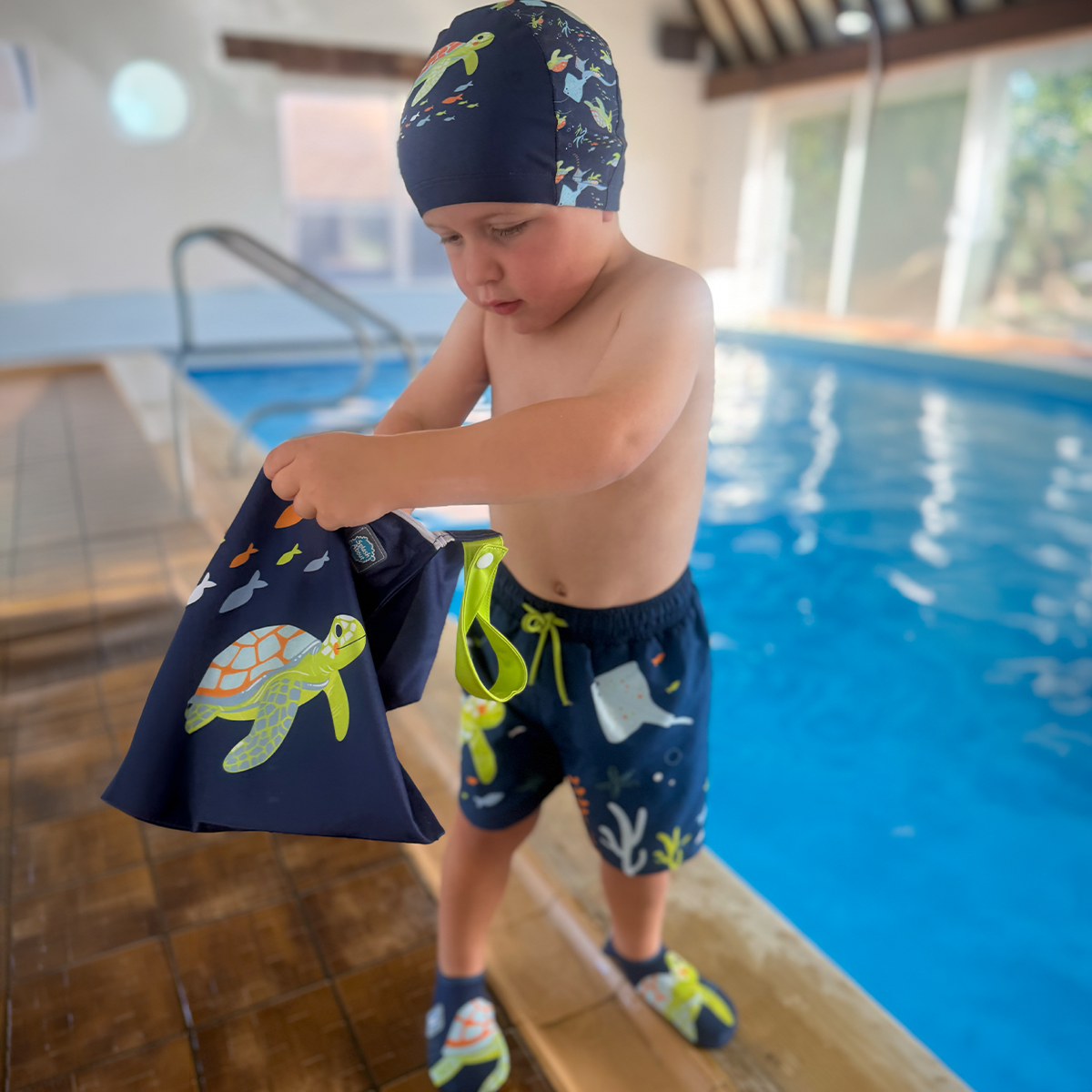
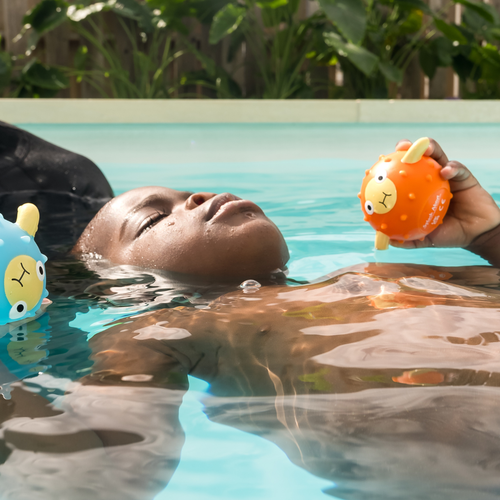
Its Sensory Toys range is hand painted with food grade paint and made without squirt holes. That means there's nothing to trap odours or bacteria between sessions, which as any swim teacher will tell you, matters more than it sounds. A Happy Nappy™ that fits well is one less thing for a sensory sensitive child to process. That leaves more of their attention for the water instead of the fabric.
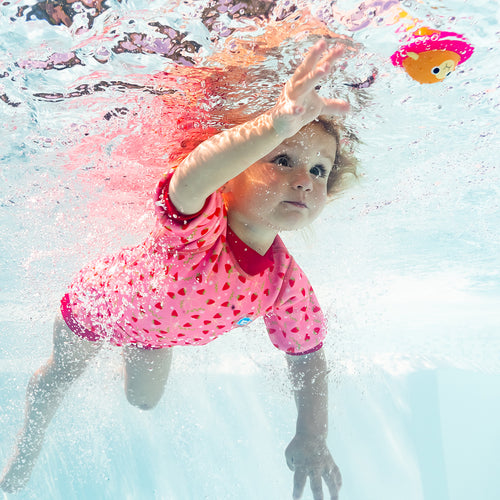
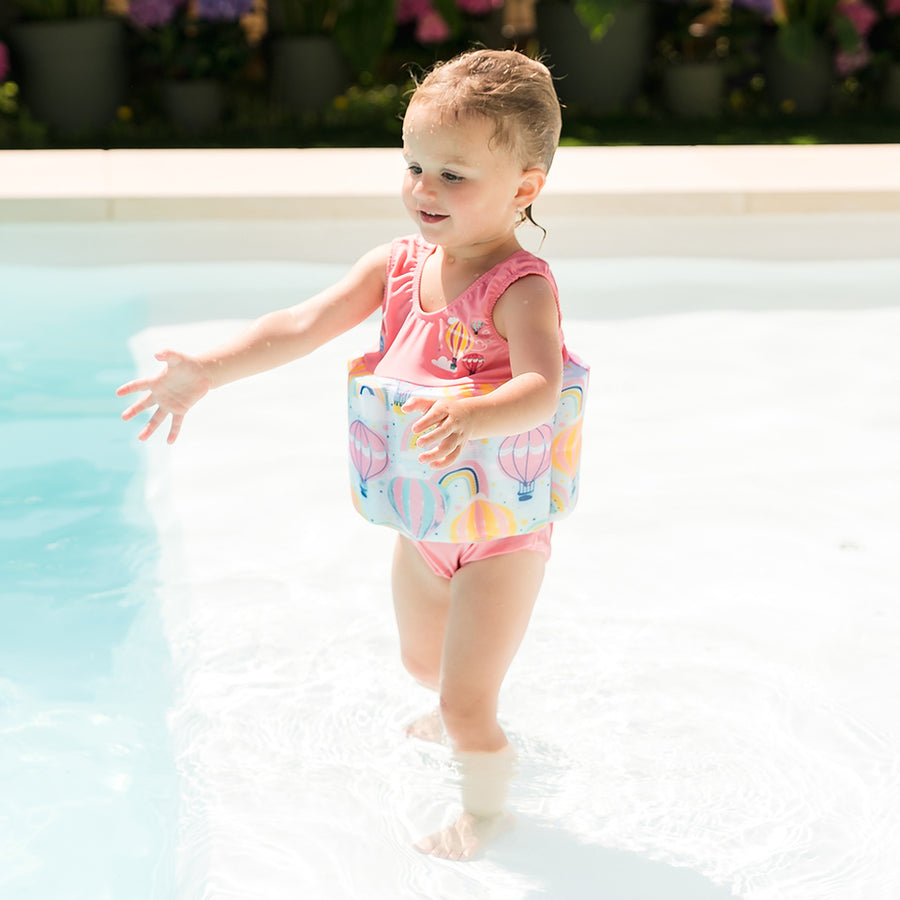
The same is true of a Floatsuit. It only helps a child if it sits comfortably, and a fit that's right for one child can still need adjusting for another. A size guide alone won't fix that. It's something you keep checking as your child grows, the same way you'd check their shoe size. As with all swimming aids, an adult needs to supervise at all times, whatever a child is wearing or holding.
The bigger picture
Every child deserves to feel safe and confident in the water, whatever their needs or way of learning. Sensory swimming toys can help with that. So can the right kit. Neither replaces what actually makes sensory swimming work. That's a calm, attentive adult going at the child's pace. Honestly, that's the whole secret.
Give it a try. Not with a bag full of toys, but with one toy used well and a little patience. You might just get a gasp of your own.
Jo Wilson is the founder of Aqua Sensory®, an international aquatic tutor and a trainer of over 2,000 infant and early years swim teachers worldwide.