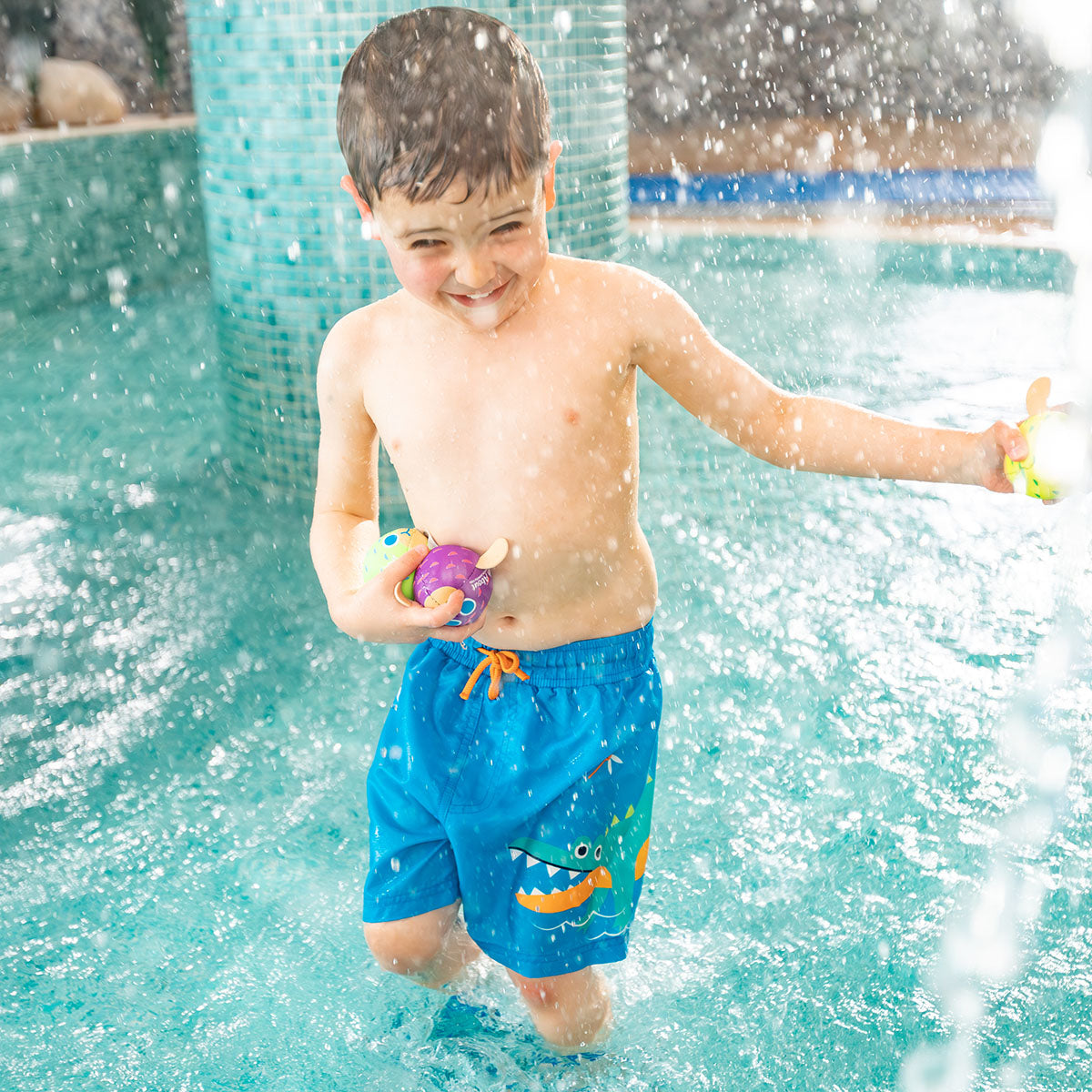

A bit of wobbliness around water is completely normal. With the right approach and the right kit, you can help your child go from anxious to actually loving the pool.
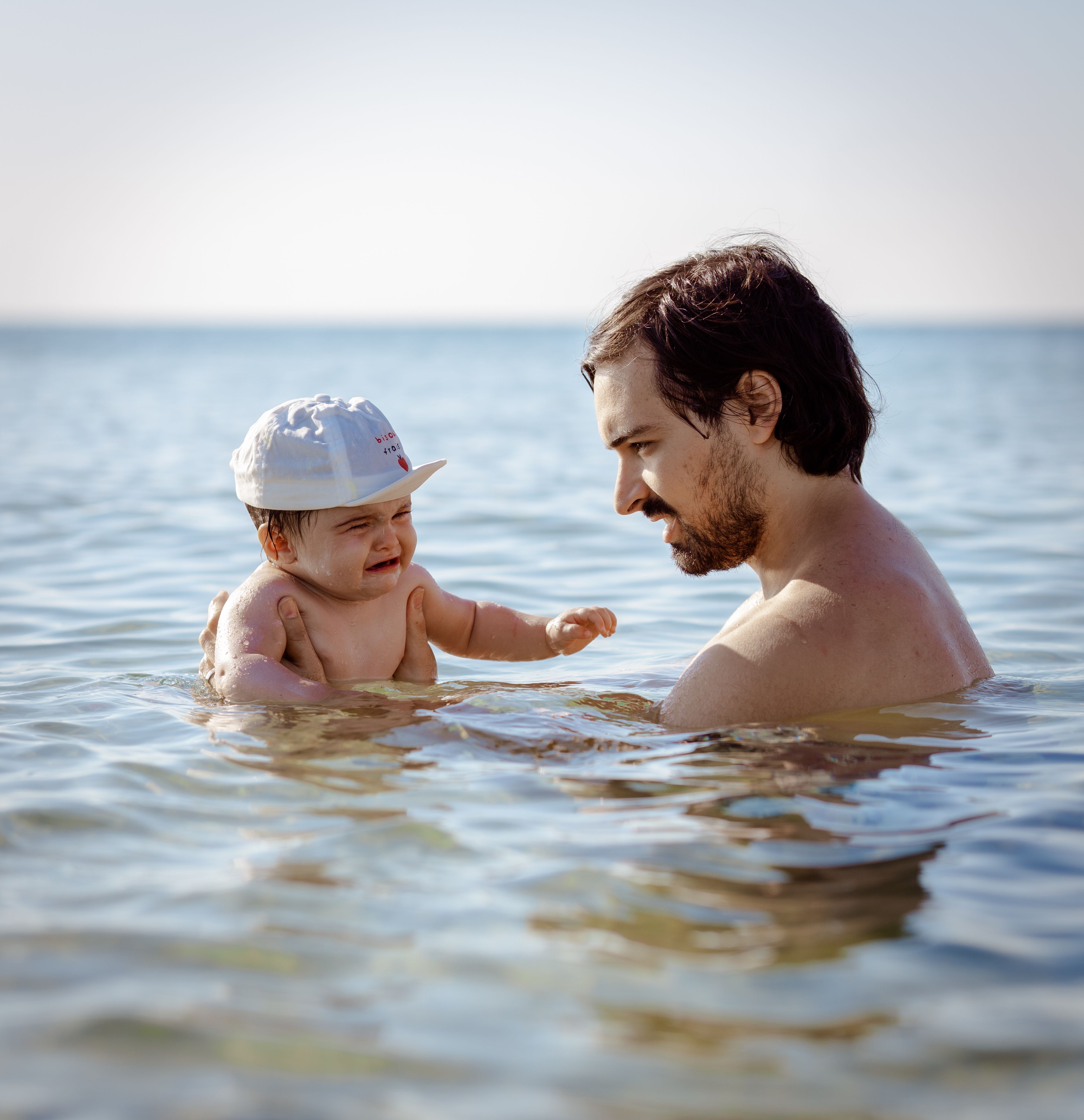
Does your little one grip your hand a bit tighter on the way to the pool? Do they bury their head in your shoulder at the first sight of the water? You're not alone. Nerves around swimming are one of the most common things we hear from parents, and they're entirely normal.
Water is an unfamiliar environment. It moves, it splashes, it doesn't behave like anything else your child knows. For a young child, that can feel like a lot to take on.
But with patience, consistency and a few practical strategies, even the most reluctant swimmer can grow to love the pool. We've spent over 20 years working with swim schools and families across the UK and beyond, so we know what helps. This guide is for you, whatever stage you and your child are at.
Why children feel nervous about swimming
Before we dive in (yes, pun intended), it's worth understanding what's behind the nerves. Fear of water can come from all sorts of places, and none of them mean there's anything wrong with your child. Common reasons include:
- A previous negative experience: a splash in the face, water in the ears or a slip on a wet surface can all leave a mark
- Sensory sensitivities: some children are very sensitive to the noise of an indoor pool, the smell of chlorine or the feel of cold water on their skin
- Fear of the unknown: not being able to touch the bottom, not knowing what's underneath them
- Separation anxiety: particularly in older toddlers who may need to be in the water without a parent
- A naturally cautious temperament: some children take more time to warm up to new things, and that's a perfectly good quality
Knowing what's behind your child's anxiety shapes how you respond to it. A child overwhelmed by noise needs different support to one who's worried about going underwater. Whatever it is, your calm presence is the most powerful thing you can offer.
"Water confidence built early lasts a lifetime. There's no rush. Every small step forward is worth celebrating."
Start at home, long before you reach the pool
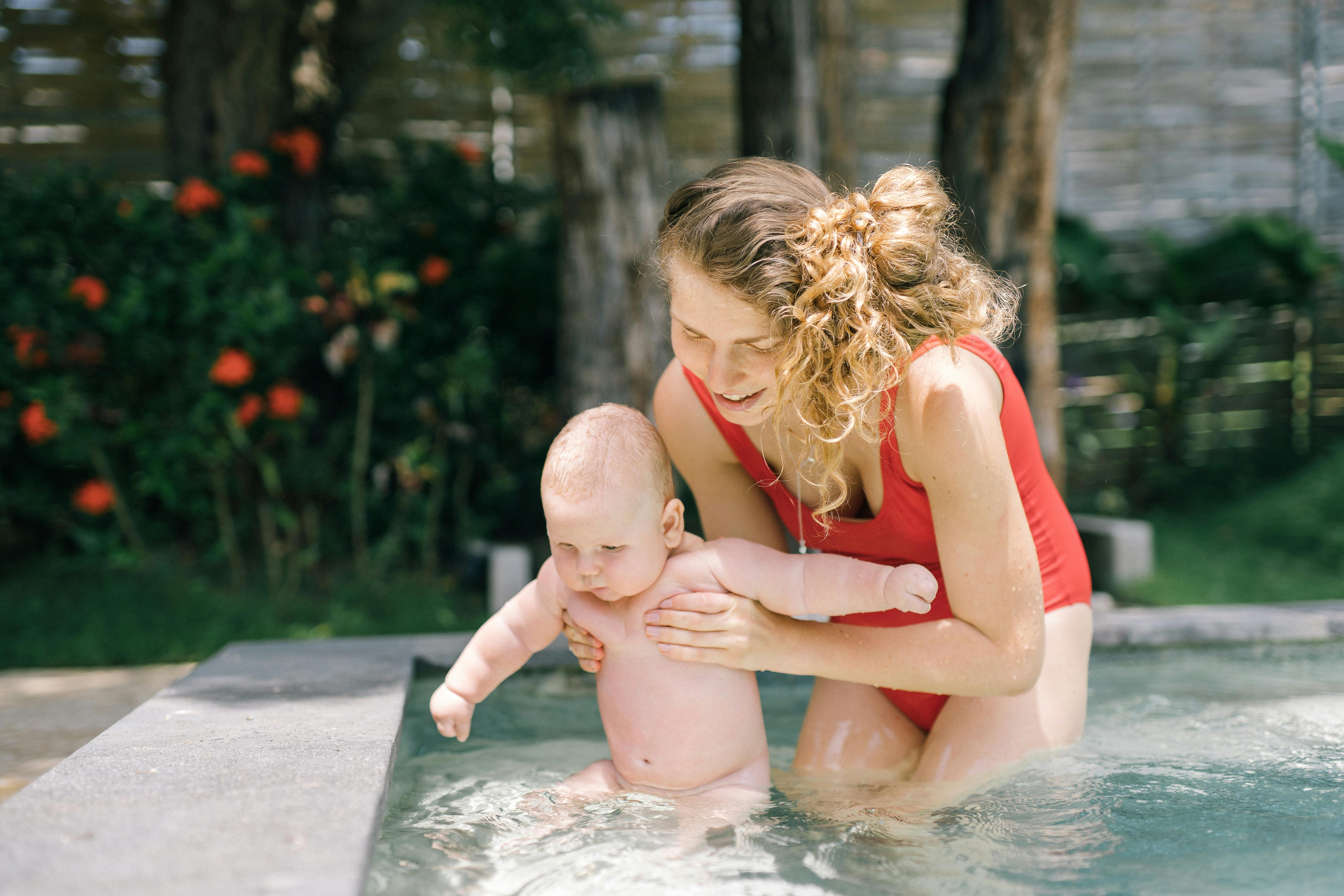
One of the most useful things you can do is make water feel ordinary in a safe, no pressure place: your own home. Bath time is your practice pool.
Bath time as a confidence builder
For babies and toddlers, the bath is a great place to build good associations with water. Try pouring water gently over their shoulders and back so they get used to the feeling. Pick up some water toys: scoops, cups, little floating characters. Let them play freely. The aim isn't to teach technique. It's simply to make water a source of fun rather than worry.
For slightly older children, let them wash their own face at the sink. Let them get used to water on their head during hair washing. You can even try blowing bubbles on the surface of the bath together. Small, playful moments like these build real confidence, and that carries over into the pool.
Talk about swimming in ordinary, positive terms
Children pick up on your energy. If you talk about swimming lessons with warmth and enthusiasm, rather than the kind of forced cheeriness that tells a clever child something might be a bit daunting, they absorb that positivity. Read books about swimming together. Watch videos of children splashing about. Talk about what they'll do at their lesson in simple terms: "You're going to kick your legs like a frog today! I wonder how big a splash you can make?"
Don't promise too much. "You're going to LOVE it, it'll be amazing!" can set expectations that backfire. But don't lean too hard on reassurance either: "I know it's scary but it'll be okay..." can actually add to the worry. Cheerful and straightforward tends to work best.
Let your child choose their own swimwear before the first lesson. Having a say in something, even just picking their favourite colour or pattern, can make the whole thing feel more exciting. Browse our Learn to Swim range together and let them pick!
Visit the pool before the first lesson
If you can, take your child to the pool for a look around before their first lesson. Just let them take in the environment: the smell, the sounds, the warmth of the changing rooms, the sight of the water.
You don't need to get in. Walk around the viewing gallery if there is one. Let them watch other children having fun. Point out things they'll recognise: "Look, those children are wearing swimming costumes just like yours!" If the pool allows it, try a casual family swim first so the place feels known rather than new.
For children with sensory sensitivities, this kind of visit can make a real difference. Knowing what to expect takes away a lot of the anxiety on its own.
Choosing kit that actually builds confidence
This might surprise you, but what your child wears in the water matters. Not just for practical reasons, but for how they feel. When a child is warm, comfortable and supported, they're far more likely to relax and get stuck in.
For babies and toddlers in parent and baby classes
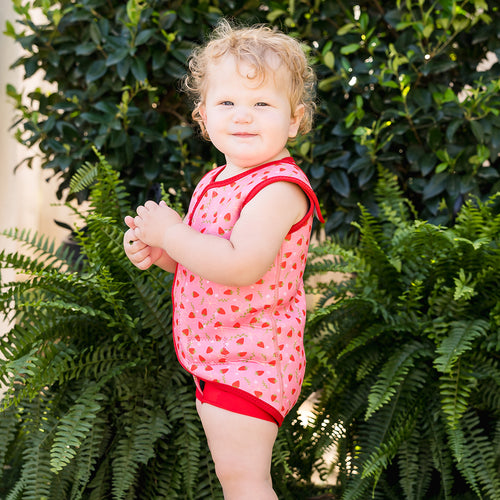
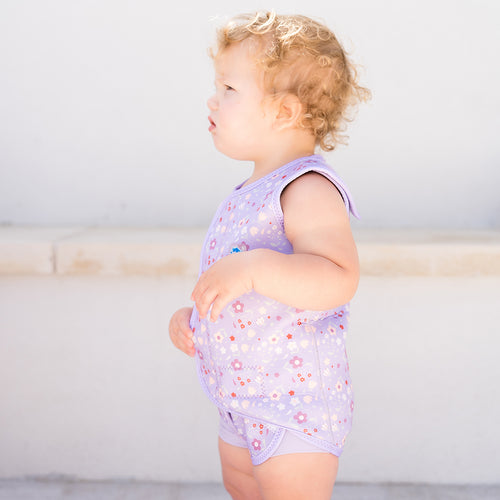
For the youngest swimmers, warmth counts for a lot. A cold, uncomfortable baby is an unhappy baby, and unhappy babies make for stressful lessons. Our Baby Wrap™ wetsuit is made from soft neoprene and keeps little ones warm in the pool. It opens flat with adjustable straps, so getting dressed and undressed is quick and easy. Pair it with a Happy Nappy Duo™: the most advanced reusable swim nappy in the world, and part of the Happy Nappy™ range insisted upon by 90% of UK swim schools. Together, they give you a kit that lets you focus on what matters.
Because when you're not worrying about practicalities, you can give your baby what they need most: eye contact, singing, smiles and the feeling that the water is a good place to be.
🏅
Happy Nappy Duo™
The world's only swim nappy with active silver technology. Part of the Happy Nappy™ range insisted upon by 90% of UK swim schools. Shop Happy Nappy Duo™ →
🤿
Baby Wrap™ Wetsuit
2mm neoprene warmth for the pool. Opens flat with adjustable straps for easy changing. Shop Baby Wrap™ →
🌡️
Warm In One™
Fleece-lined warmth for your baby's lesson. Wear with a Happy Nappy Duo™ for complete pool kit. Shop Warm In One™ →
For toddlers and young children learning to swim
One of the biggest sources of anxiety in swimming lessons is feeling out of control in the water. Not knowing what your body's going to do. That's where the right swim aid makes a real difference.
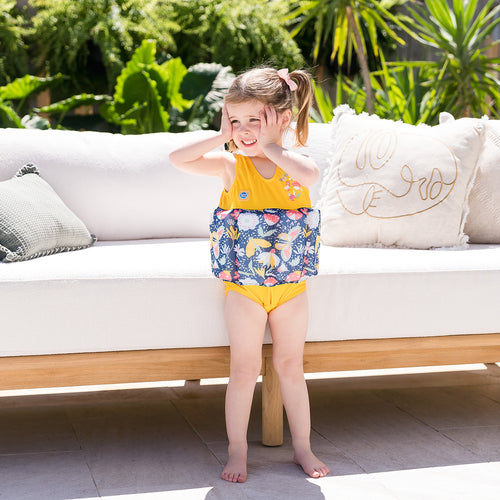
Our Floatsuits are loved by children and parents for good reason. The 16 piece adjustable float system holds children in the correct position for learning to swim: tipped gently forward, shoulders under the water. That gives them a sense of stability that armbands can't match. And because you remove the floats in pairs as their confidence grows, there's no sudden jump from lots of support to none at all. It's a gradual, steady progression.
For children who need a bit more coverage, our Sleeved Floatsuit adds extra fabric over the upper arms, legs, neck and shoulders. It works well for outdoor pools too. Remember to apply sun cream to any exposed skin before heading outside.
Or if you want something lighter, the Go Splash Swim Vest is slimline, easy to pack and great for holidays. It keeps children in the correct position as they learn and gives them real freedom to move.
All our swimming aids must be used under constant adult supervision at all times. They're learn to swim aids and should not be used in the sea or open water. Always keep a supervising adult in or beside the pool whenever children are swimming.
👙
Floatsuit
16 piece adjustable float system. No armbands needed. For children aged 1 to 6.
Shop Floatsuits →
👕
Sleeved Floatsuit
Extra coverage on upper arms, legs, neck and shoulders. Ideal for outdoor pools and holidays.
Shop Sleeved Floatsuits →
🦺
Go Splash Swim Vest
Slimline and packable. Keeps children in the correct position as they learn.
Shop Go Splash →
On the day: a calm, practical plan
Even with good preparation, the day of the lesson can bring a fresh round of wobbles. Here's what tends to help.
Give yourself plenty of time
Rushing creates panic. Arrive early so your child can take in the surroundings at their own pace. Your calm, unhurried energy is catching.
Make getting changed part of the fun
Let them choose which costume to wear, from your shortlist. Talk about what you'll do. Getting into their Floatsuit or swim vest is the signal: we're going swimming. Make it feel like that.
Get in together where you can
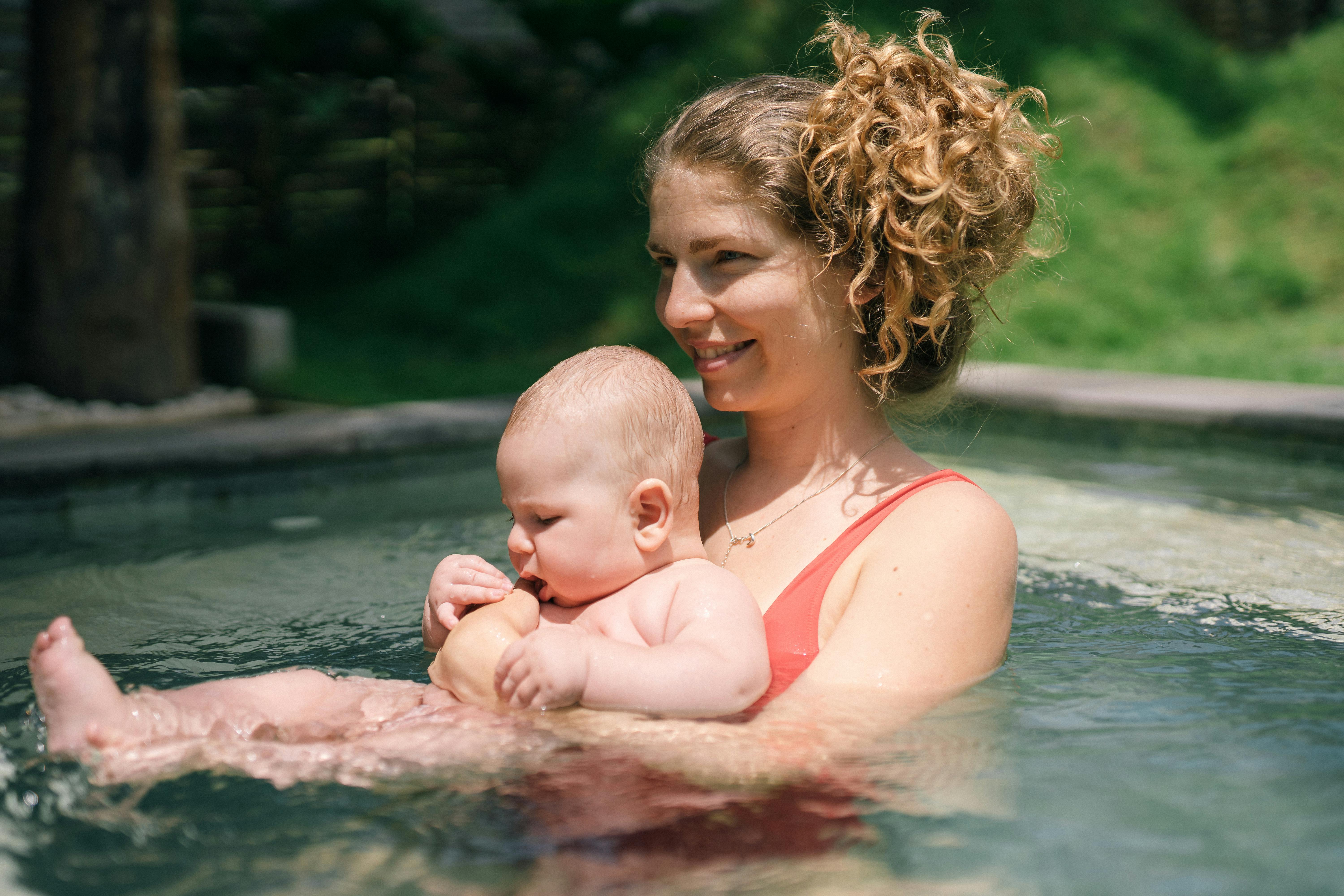
For parent and baby classes, your presence in the water is what they need most. Hold them close, make eye contact, sing something familiar and let them adjust at their own pace. For older children heading into independent lessons, a warm goodbye and a genuine "I'll be right here watching!" goes a long way.
Follow their lead
Never push a child's head underwater or insist they do something that frightens them. A good swim teacher will know this, but it's worth holding to as a parent too. Trust builds progress far faster than pressure does.
Celebrate every win, however small
Did they put their face near the water today? Brilliant. Did they kick their legs for the first time? Amazing. Specific praise keeps them going. "I saw you kick so hard then, you were like a little fish!" beats "well done" every time.
Have a post swim treat ready
Something warm and cosy after the lesson: a hot chocolate, a favourite snack, a small treat. It builds a good connection with the whole experience. Before long, the lesson becomes the thing they look forward to.

Supporting children with sensory sensitivities
For children with sensory processing differences, autism or heightened sensitivities, swimming pools can be a lot to take in: the echoing noise, the bright lighting, the unpredictable splashing, the smell of chlorine. None of this means your child can't swim. It just means they may need more time, more preparation and a bit more thought put into it.
Things many families find helpful:
- Ask if the swim school offers quieter sessions, smaller groups or individual lessons
- Use earplugs or swimming earbands to take away the uncomfortable sensation of water in the ears
- Let your child wear their swimwear at home before the lesson so it already feels familiar on their skin
- Use goggles so your child can see clearly underwater: what you can see is a lot less worrying than what you can't
- Practise the pre swim routine at home, step by step, so the day itself holds nothing unexpected
- Talk to the swim teacher before the first class: a good teacher will welcome it and adapt accordingly
Our goggles work particularly well for children who feel anxious about putting their face in the water. Suddenly they can see what's down there, and it becomes interesting rather than worrying. We also stock pool toys and sensory toys that can make lessons feel more playful and relaxed.
What to do when things don't go to plan
Some days will be harder than others. There'll be sessions where your child cries at the poolside, refuses to get in, or seems to go backwards after a good week. That's normal. It doesn't mean you're failing, and it doesn't mean your child won't get there.
"Progress isn't always a straight line. Swimming confidence builds over months and years, not in a single lesson."
If your child is consistently very distressed, it's worth pausing and taking stock. Sometimes a short break, then coming back a few months later when they're that bit older, is the right call. Talk to their swim teacher. They'll have seen it before and can help you work out the best path forward.
If something specific happened: a slip, water in the face, a scary moment. Name it. "That was a bit of a shock, wasn't it? That water went right up your nose! Let's do something daft in the bath tonight." Acknowledging it with a bit of humour and moving on calmly is usually far more useful than making it a big thing.
Try not to measure your child's progress against other children in the class. Every child is different. Some who seemed fearless at two become cautious at four. Your child is on their own timeline, and that's exactly right.
Why the right kit really does make a difference
We believe, and over 20 years of working alongside swim schools has only confirmed this, that what your child wears in the water changes how they feel in it. It's not about spending a lot. It's about kit that does what it's supposed to do.
A child who's warm stays in longer. A child whose Floatsuit holds them in the right position feels more in control. And a child who feels in control is free to learn. A baby who's comfortable, with parents who aren't anxious about practicalities, picks up on that calm and responds to it.
So we work closely with UK swim schools, and 90% of them insist upon our Happy Nappy™. Parents who find us tend to stick with us, from baby classes right through to independent lessons and beyond.
Your nervous swimmer's confidence kit
- Well fitted swimwear they helped choose
- For babies: Happy Nappy Duo™ for reliable, no fuss protection
- A Floatsuit or Go Splash Swim Vest to build confidence step by step
- Goggles so they can see and explore underwater
- A favourite pool toy or sensory toy for comfort
- Earbands if water in the ears is an issue
- A warm towel and a post swim treat waiting for them
- A calm, patient, cheering from the poolside you 💙
A final word from us
Learning to swim is one of the best things you can do for your child. Not just for safety, but for the joy of it. Moving through water. Holding your breath and opening your eyes to a blurry, shimmering world below. Kicking your legs and going somewhere under your own power. Children carry that feeling with them.
The nervous child on the poolside today becomes the confident swimmer who can't wait to get in. They just need your patience, your warmth and a bit of the right support to get there.
We're rooting for every single one of them. And for you too. 💙

Lesley Beach
Splash About has been developing ground breaking swimming products for babies and children for over 20 years. With its invention of the first float jacket through to the award winning Happy Nappy range of products, Splash About is now a world class supplier to thousands of swim schools, leisure complexes and parents in over 45 countries.
Latest Blogs
Adult Swimwear for Swimming Lessons: The Complete Men's & Women's Swimwear Buying Guide
One Piece vs Bikini: Which Is Best for Swimming?